Lymph Savior Official Website › Articles › Regulatory literacy
Regulatory literacyWhat 21 CFR 101.93 Actually Requires On A Label Like This One
Every page on this website carries a sentence required by one specific federal regulation: 21 CFR 101.93.
It is the rule behind “these statements have not been evaluated by the Food and Drug Administration,” printed on this website's own disclaimer page. Reading the regulation itself, rather than just the sentence it produces, shows exactly what it requires, what it certifies, and what it leaves entirely untouched.
This article explains a regulation. It is not legal advice, and nothing in it changes what is printed on this website's own disclaimer page, which remains the governing statement for everything sold here.
The sentence already on this website
Every page on lymphsaviior.com carries a version of the same two sentences, printed in the site footer and repeated on the disclaimer page: “These statements have not been evaluated by the Food and Drug Administration. This product is not intended to diagnose, treat, cure or prevent any disease.” The disclaimer page states plainly that the one support claim printed on the Lymph Savior bottle sits under that ceiling.
That sentence is not a courtesy the manufacturer has chosen to add. It is wording required almost word for word by a specific federal regulation: 21 CFR 101.93, “Certain types of statements for dietary supplements.” This article reads that regulation directly, rather than relying on the sentence it produces, because the sentence alone does not explain what the rule requires, what triggers it, or what it leaves outside its scope entirely.
What created this rule, and why 1994 matters
21 CFR 101.93 exists because of the Dietary Supplement Health and Education Act of 1994, usually shortened to DSHEA. Before DSHEA, a product sold with a health-related claim on its label risked being regulated as an unapproved drug. DSHEA created a middle category for dietary supplements: a manufacturer could describe how an ingredient affects the structure or function of the body, such as “supports joint health” or, on this label, “advanced lymphatic health support,” without that statement being treated as a drug claim, provided the statement met specific conditions.
One of those conditions is the disclaimer. The statute, codified at 21 U.S.C. 343(r)(6), permits the structure/function statement; 21 CFR 101.93 is the regulation that spells out exactly what a manufacturer has to do to use that permission, including the disclaimer text, where it has to go, how big it has to print, and a separate notification duty to the FDA.
The two things 21 CFR 101.93 actually requires
Reading the regulation's own text, it does two distinct jobs, and it is worth separating them because this website's footer only visibly reflects one.
1. A notification to FDA
Paragraph (a) requires that no later than 30 days after a dietary supplement bearing a structure/function statement is first marketed, the manufacturer, packer or distributor must notify the FDA's Office of Dietary Supplement Programs. The notice has to include the business's name and address, the exact text of the statement, the ingredient it concerns, and the product's brand name. It has to be signed by someone who certifies the notice is accurate and that the company has substantiation that the statement is truthful and not misleading.
2. The disclaimer itself
Paragraphs (c) through (e) set out the disclaimer's exact wording, where it must sit, and how large it must print. Where there is one structure/function statement, the label must carry: “This statement has not been evaluated by the Food and Drug Administration. This product is not intended to diagnose, treat, cure, or prevent any disease.” Where there is more than one such statement, as there effectively is across a multi-page website like this one, a single plural disclaimer may be used instead: “These statements have not been evaluated…” which is the version printed here.
The placement rule is specific. The disclaimer has to sit next to the statement with nothing in between, or be linked to it with a symbol such as an asterisk, on every panel or page where the statement appears; and where it cannot sit adjacent, it has to be set off in its own box. The typesize rule is equally specific: boldface, no smaller than one-sixteenth of an inch.
The notification duty in paragraph (a) is easy to overlook because a buyer never sees it; it is a filing between the company and the agency, not something that appears on a label. It is worth naming anyway, because it is the one part of 21 CFR 101.93 that puts a federal paper trail behind a structure/function claim before the first bottle ships, even though that paper trail is a company's own signed certification rather than an independent check. The regulation requires the individual who signs it to certify, in writing, that the company holds substantiation that the statement is truthful and not misleading; it does not require that substantiation to be filed alongside the notice, reviewed by the agency, or made available to the public on request.
What the regulation explicitly does not certify
None of that is a safety review, a premarket approval, or an evaluation of whether the product does what it claims. The regulation's own structure makes that clear: paragraph (f) permits structure/function statements precisely because they are not claims the agency has reviewed for a disease outcome. Nothing in 21 CFR 101.93 asks the FDA to test the product, inspect its formula, or confirm the ingredients at the amounts printed, or in this case, not printed.
| What the regulation requires | What it does not do |
|---|---|
| A notice filed with the FDA within 30 days of first marketing the statement | Any review of whether the notice's claims are true |
| A company certification that it holds substantiation for the statement | A requirement to publish that substantiation, or for the FDA to check it |
| A specific disclaimer sentence, in a specific size, in a specific place | Any statement that the product has been tested, inspected or approved |
| A structure/function statement that avoids naming or implying a disease | Any claim about how well the statement is supported by evidence |
The whole apparatus is a labelling and notification rule. It governs what a company must say and file, not whether what it says is correct.
Structure/function claim versus disease claim
The regulation's paragraph (g) is the part that does the real definitional work, because it is what separates a permitted structure/function statement from a disease claim that would require the product to be regulated as a drug. It defines a disease as damage to an organ, part, structure or system such that it does not function properly, or a state of health leading to that dysfunction, and it lists ten ways a statement can count as claiming to diagnose, mitigate, treat, cure or prevent one: naming a specific disease, describing its signs or symptoms, implying an effect on it through the product's name or formulation, citing a publication in a way that implies disease treatment, using the word disease itself outside a general context, using an image or symbol to the same effect, and several more specific routes.
“Advanced lymphatic health support” is written to sit on the permitted side of that line: it describes a bodily system functioning, rather than naming or implying treatment of a specific disease such as lymphedema. That is precisely why this website's own disclaimer page is explicit that lymphedema and swelling linked to cancer treatment, heart, kidney or liver disease belong with a clinician rather than with a supplement: those are the disease-adjacent situations the structure/function wording is built to stay clear of.
What “not evaluated” means, and does not mean
“These statements have not been evaluated by the Food and Drug Administration” is a precise sentence, and it is worth reading precisely. It does not mean the FDA is unaware the product exists, nor that nobody checks anything about it. The agency can and does inspect manufacturing facilities for Good Manufacturing Practice compliance, and it can act against a product after the fact if it is adulterated, misbranded, or found to contain an unsafe ingredient.
What the sentence means is narrower and more specific: nobody at the FDA reviewed the particular structure/function statement on this label before it went on sale and confirmed it was accurate. There is no premarket approval step for a dietary supplement claim in the way there is for a drug claim. This website's own testing and quality page makes the same point about the FDA-registered facility mark on the carton: registration is a listing, not an inspection outcome, and it is not evidence that the claim on the front of the bottle is true.
The regulation's own amendment history
21 CFR 101.93 is not a single document frozen in 1994. Its text carries its own citation history in the Code of Federal Regulations: the framework was published in the Federal Register on 23 September 1997, with the disclaimer and disease-claim provisions taking their current shape in a further Federal Register notice on 6 January 2000. It was amended again on 30 March 2001 and 6 November 2001, refining the criteria for what counts as a disease claim, and most recently on 24 March 2023.
That history matters for one reason: a regulation that has been revisited six times across nearly three decades is a rule the agency keeps returning to and adjusting, not a one-off box ticked in the 1990s and forgotten. The current disclaimer wording on this website's disclaimer page is the version the rule requires as it stands today.
It is also worth being precise about what 21 CFR 101.93 does not cover, because the regulation sits inside a larger body of dietary-supplement law that handles other questions separately. It says nothing about the Supplement Facts panel or the amounts printed on it, which is a different part of the labelling rules entirely; a separate article on this website covers that gap on this label specifically. It says nothing about Good Manufacturing Practice, which is covered under a different part of the Code of Federal Regulations and is the subject of a different carton mark, covered on the testing and quality page. And it says nothing about who may be credited as having formulated a product, which is the subject of a related article on this website. Treating one regulation as though it answered every labelling question on the carton is a common and avoidable mistake.
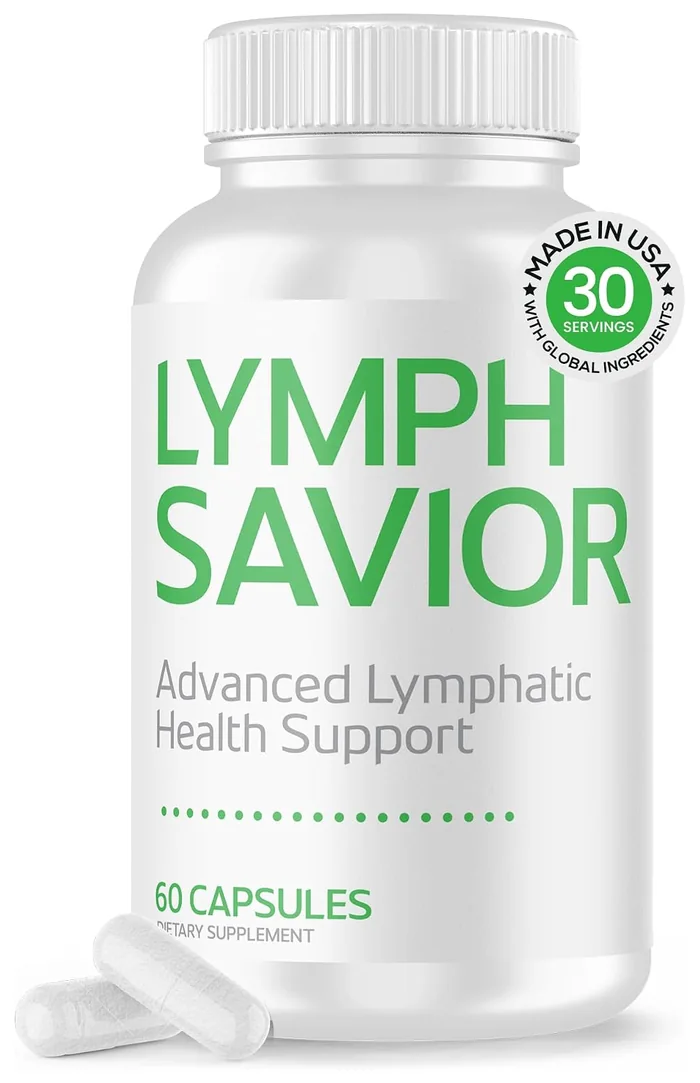
Lymph Savior, with the regulation it operates under read in full
One structure/function claim, one required disclaimer, and a website that explains the rule behind both rather than just printing the sentence it produces.
One bottle $79 · three bottles $207 · 60-day money-back guarantee
Order Lymph Savior On The Official Website60 capsules a bottle · lot LYM-26/LY-1430 · ships from the U.S.
What a reader should take from reading the rule itself
- Read “has not been evaluated by the FDA” as a statement about premarket review specifically, not as a statement that no oversight of any kind exists.
- Understand that the company, not the FDA, certifies it holds substantiation for the claim; the regulation requires that certification but does not require it be made public or checked before the product ships.
- Recognise a structure/function claim like “advanced lymphatic health support” for what the rule defines it as: a statement about a healthy system working, which is why it has to stay well clear of naming lymphedema or any other disease.
- Treat the FDA-registered facility mark and the structure/function disclaimer as two separate, narrow regulatory facts, neither of which says the product works.
- Read the regulation's own text, which is short and publicly available, rather than relying on anyone's summary of it, including this one.
This website's own disclaimer page sets out the regulatory position in full, including the precautions that follow from it, and a related article covers the carton marks that sit outside any federal requirement at all.
- Code of Federal Regulations, Title 21, Section 101.93. Certain types of statements for dietary supplements. https://www.ecfr.gov/current/title-21/chapter-I/subchapter-B/part-101/subpart-E/section-101.93
- U.S. Food and Drug Administration. Structure/Function Claims. https://www.fda.gov/food/food-labeling-nutrition/structurefunction-claims
- U.S. Food and Drug Administration. Dietary Supplement Labeling Guide. https://www.fda.gov/food/dietary-supplements-guidance-documents-regulatory-information/dietary-supplement-labeling-guide