Lymph Savior Official Website › Lymphatic Health Guide
Lymphatic Health GuideThe Lymphatic System In Plain Terms: What It Does And What Moves It
By the Lymph Savior Team at Lymphsaviior · Reviewed by Dr. Carolyn Finnegan, functional medicine practitioner · Revised
Lymph is the fluid that leaks out of your capillaries and has to get back another way.
Vessels collect it, nodes filter it, and it empties into the veins at the base of the neck. There is no heart behind it: the vessels squeeze themselves, and the muscles around them do the rest. That single fact explains most of what helps and most of what does not.
Written for somebody whose ankles swell by the evening and who wants to know what is actually going on, rather than for somebody already sold on a capsule.
What lymph is, and where it goes
Blood reaches the tissues under pressure, and at the far end of the capillary bed some of its water is pushed out into the space between the cells. Most is drawn back in at the venous end. The remainder, together with protein, cellular debris and immune cells, has to leave another way, and that way is the lymphatic system.
It begins as blind-ended capillaries with overlapping cell junctions that act as one-way flaps. Fluid pushes in and cannot push back out. Those capillaries join into collecting vessels, which are divided by valves into short segments called lymphangions, and the collecting vessels pass through chains of lymph nodes on the way.
In the nodes, the fluid is slowed and inspected. This is where immune cells meet whatever the tissue has sent them, and it is why nodes swell when you have an infection: they are busy, not blocked.
From the nodes, the fluid travels up progressively larger trunks and finally through the thoracic duct, which empties into the subclavian vein at the base of the neck. A couple of litres make that journey in a day in an adult at rest (Davis, Annu Rev Physiol 2025).
Drainage is what this system does: it returns fluid that has nowhere else to go. Flushing implies a stream of water moving something out of the body, and that is a different organ entirely. What leaves the body leaves through the kidneys, the liver and the gut, and the lymphatics feed the bloodstream rather than a drain.
What actually makes lymph move
This is the part most articles skate over, and it is the part that decides what is worth doing.
Lymphatic collecting vessels are not passive tubes. Their walls carry muscle cells that contract rhythmically, several times a minute, squeezing fluid from one valved segment into the next. That intrinsic pump is the system’s own engine and it works whether you move or not (Razavi, 2025, Breslin, 2023).
On top of that sit the extrinsic forces. Skeletal muscle contracting around a vessel squeezes it. Arterial pulsation nudges the vessels that run alongside arteries. The pressure swing of breathing pulls at the top of the chain where the thoracic duct empties. Gravity works against all of it in a standing leg and with it in a raised one.
So the honest hierarchy of what moves lymph is short, and nothing on it is expensive.
Muscle, used
Lymph has no heart behind it. The vessels have their own muscle cells and they contract, and beyond that the fluid moves because skeletal muscle squeezes the vessels that run between it. Walking is the cheapest thing on this list.
Compression, fitted
External pressure is the intervention with the most evidence behind it in the clinical form of this problem, and a fitted garment beat almost everything it has been compared against.
Breathing, deeply
The thoracic duct empties into the veins at the base of the neck, and the pressure swing of a deep breath is part of what pulls it along.
Weight and salt
Both change how much fluid sits in the tissue before the lymphatics ever see it. Neither is glamorous and both are larger levers than any capsule.
What the evidence supports, ranked
Most of the good evidence in this subject comes from lymphoedema after cancer treatment, because that is where the condition is common enough and severe enough to study properly. It is not the same as an ankle that swells in hot weather, and the results have to be read with that in mind. They are still the best guide there is to what the system responds to.
| Intervention | What the evidence shows | How strong |
|---|---|---|
| Progressive resistance training | 141 breast-cancer survivors with stable arm lymphoedema lifted weights twice weekly for a year in a compression sleeve. Swelling did not increase, symptoms improved, and specialist-assessed flare-ups fell from 29 per cent to 14 per cent (Schmitz, NEJM 2009). | Strong. A randomised trial with a hard outcome. |
| Heavier resistance loads | A separate randomised trial tested heavy loads specifically and found no acute worsening of swelling (Cormie, 2013), with function improving in the follow-up analysis (Brown, JCO 2015). | Strong, and it overturned standing advice. |
| Compression garments | Fitted compression is the backbone of clinical management and is the comparator other things are measured against. | Strong, and built into published guidance (Torgbenu, 2023). |
| Pneumatic compression devices | Meta-analysed in 2025 with measurable effect on limb volume (Panchik, 2025). | Moderate, for the clinical condition. |
| Manual lymphatic drainage | A systematic review found the evidence mixed and the added benefit over standard care unclear (Wanchai, 2021). | Weak to moderate, and widely oversold. |
| Oral benzopyrones | Coumarin at 200 mg twice daily for six months did not reduce arm volume against placebo, and produced laboratory evidence of liver injury in 6 per cent (Loprinzi, NEJM 1999, Cochrane benzo-pyrones, 2004). | Strong evidence of no benefit. |
Every row here is about the clinical condition. Nothing in this table was tested in people whose ankles swell after a long day on their feet.
The intervention with the best evidence in this whole subject is moving muscle. The intervention with the clearest negative result is a pill.What the table above says in one line
Where botanicals fit, and where they do not
Two plants that turn up on almost every lymphatic shelf have genuine dose-specific human evidence, and it belongs to a neighbouring problem.
Horse chestnut seed extract, standardised to 50 mg of aescin twice daily, was compared directly against class II compression stockings in 240 people with chronic venous insufficiency over twelve weeks. Lower-leg volume fell 43.8 ml on the extract and 46.7 ml on compression, and rose 9.8 ml on placebo (Diehm, Lancet 1996). The Cochrane review across seven placebo-controlled trials found the same direction of effect (Cochrane HCSE, 2012).
Centella asiatica’s triterpenic fraction improved microcirculatory measures and ankle swelling in venous hypertension, with a 120 mg daily arm separating from a 60 mg one (Incandela, 2001, Chong & Aziz, 2013).
Both of those are venous results. Chronic venous insufficiency is leaking vein valves and raised venous pressure; lymphoedema is a failure of the drainage side. They can look similar at the ankle, they are managed differently, and a result in one does not transfer to the other (Gloviczki, 2025, Cochrane phlebotonics, 2020).
Which plant, at what amount, tested in whom? If a label cannot answer the second of those, the third one cannot be checked at all. That is the single most useful filter there is in this category, and it fails a great many products including some good ones.
When swelling is not a lifestyle question
Everything above assumes ordinary, both-sided, end-of-day swelling in somebody who is otherwise well. Several other things present the same way and none of them should wait.
| What it looks like | Why it matters |
|---|---|
| One calf, over days, painful or warm | Deep vein thrombosis presents like this and is urgent. |
| Red, hot, spreading, with fever | Cellulitis. It needs antibiotics, not elevation. |
| Both legs, with breathlessness or rapid weight gain | A heart, kidney or liver cause. The fluid is the symptom. |
| One limb after surgery or radiotherapy on that side | Secondary lymphoedema, which has its own clinical pathway (NCI: lymphoedema). |
| Swelling with skin changes, weeping or ulceration | Long-standing venous disease or lymphoedema, and both need assessment. |
This is the table that should come before any shopping in this category, which is why it is here rather than at the foot of the page.
For anyone who has been told they have lymphoedema, the published guidance is specific and the pathway is real: fitted compression, decongestive therapy, skin care and exercise (Torgbenu, 2023, NHS: lymphoedema). No supplement is part of it.
Who publishes this Lymph Savior website?
Every paper cited in a sentence on this page, in full.
- Loprinzi CL, Kugler JW, Sloan JA, et al. Lack of effect of coumarin in women with lymphedema after treatment for breast cancer. N Engl J Med. 1999;340(5):346-50. https://pubmed.ncbi.nlm.nih.gov/9929524/.
- Badger C, Preston N, Seers K, Mortimer P. Benzo-pyrones for reducing and controlling lymphoedema of the limbs. Cochrane Database Syst Rev. 2004;(2):CD003140. https://pubmed.ncbi.nlm.nih.gov/15106192/.
- Schmitz KH, Ahmed RL, Troxel A, et al. Weight lifting in women with breast-cancer-related lymphedema. N Engl J Med. 2009;361(7):664-73. https://pubmed.ncbi.nlm.nih.gov/19675330/.
- Cormie P, Pumpa K, Galvao DA, et al. Is it safe and efficacious for women with lymphedema secondary to breast cancer to lift heavy weights during exercise: a randomised controlled trial. J Cancer Surviv. 2013;7(3):413-24. https://pubmed.ncbi.nlm.nih.gov/23604998/.
- Brown JC, Schmitz KH. Weight lifting and physical function among survivors of breast cancer: a post hoc analysis of a randomized controlled trial. J Clin Oncol. 2015;33(19):2184-9. https://pubmed.ncbi.nlm.nih.gov/25964257/.
- Wanchai A, Armer JM. Manual lymphedema drainage for reducing risk for and managing breast cancer-related lymphedema after breast surgery: a systematic review. Nurs Womens Health. 2021;25(5):377-383. https://pubmed.ncbi.nlm.nih.gov/34461070/.
- Panchik D, Klepper D, Knecht K, et al. Effect of advanced pneumatic compression devices in the treatment of lymphedema: a systematic review and meta-analyses. Lymphology. 2025;58(3):135-144. https://pubmed.ncbi.nlm.nih.gov/41406422/.
- Torgbenu E, Luckett T, Buhagiar MA, et al. Guidelines relevant to diagnosis, assessment, and management of lymphedema: a systematic review. Adv Wound Care (New Rochelle). 2023;12(1):15-27. https://pubmed.ncbi.nlm.nih.gov/35196892/.
- Davis MJ, Zawieja SD, King PD. Transport and immune functions of the lymphatic system. Annu Rev Physiol. 2025;87:151-172. https://pubmed.ncbi.nlm.nih.gov/39441893/.
- Breslin JW. Lymphatic clearance and pump function. Cold Spring Harb Perspect Med. 2023;13(9):a041187. https://pubmed.ncbi.nlm.nih.gov/35667711/.
- Razavi MS, Munn LL, Padera TP. Mechanics of lymphatic pumping and lymphatic function. Cold Spring Harb Perspect Med. 2025;15(1):a041171. https://pubmed.ncbi.nlm.nih.gov/38692743/.
- Pittler MH, Ernst E. Horse chestnut seed extract for chronic venous insufficiency, Cochrane Database Syst Rev. 2012;11:CD003230. https://pubmed.ncbi.nlm.nih.gov/23152216/.
- Diehm C, Trampisch HJ, Lange S, Schmidt C. Comparison of leg compression stocking and oral horse-chestnut seed extract therapy in patients with chronic venous insufficiency, Lancet. 1996;347(8997):292-4. https://pubmed.ncbi.nlm.nih.gov/8569363/.
- Gloviczki ML, Kakkos SK, Urbanek T, et al. The role of venoactive compounds in the treatment of chronic venous disease. J Vasc Surg Venous Lymphat Disord. 2025;13(4):102258. https://pubmed.ncbi.nlm.nih.gov/40348378/.
- Martinez-Zapata MJ, Vernooij RW, Simancas-Racines D, et al. Phlebotonics for venous insufficiency. Cochrane Database Syst Rev. 2020;11:CD003229. https://pubmed.ncbi.nlm.nih.gov/33141449/.
- Chong NJ, Aziz Z. A systematic review of the efficacy of Centella asiatica for improvement of the signs and symptoms of chronic venous insufficiency, Evid Based Complement Alternat Med. 2013;2013:627182. https://pubmed.ncbi.nlm.nih.gov/23533507/.
- Incandela L, Belcaro G, De Sanctis MT, et al. Total triterpenic fraction of Centella asiatica in the treatment of venous hypertension: a clinical, prospective, randomized trial using a combined microcirculatory model. Angiology. 2001;52 Suppl 2:S61-7. https://pubmed.ncbi.nlm.nih.gov/11666126/.
- National Cancer Institute. Lymphedema (PDQ) - Patient Version. https://www.cancer.gov/about-cancer/treatment/side-effects/lymphedema/lymphedema-pdq
- NHS. Lymphoedema. https://www.nhs.uk/conditions/lymphoedema/
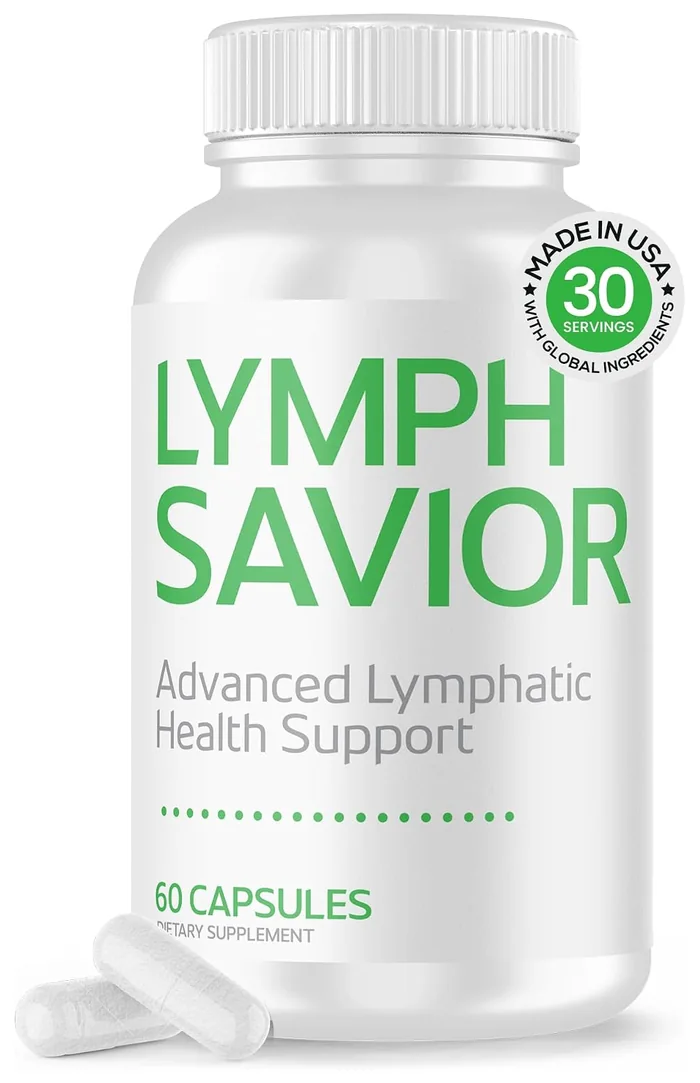
Lymph Savior sits alongside the things in this guide, not instead of them
Six botanicals, two capsules a day, and an honest account of how far the evidence behind them reaches. There are 60 days from purchase to change your mind.
One bottle $79 · three bottles $207 · 60-day money-back guarantee
Order Lymph Savior On The Official Website60 capsules a bottle · lot LYM-26/LY-1430 · ships from the U.S.