Lymph Savior Official Website › Side Effects
Side EffectsDoes Lymph Savior Have Side Effects? Interactions, Plant By Plant
By the Lymph Savior Team at Lymphsaviior · Reviewed by Dr. Carolyn Finnegan, functional medicine practitioner · Revised
No caution is printed anywhere on the Lymph Savior artwork, which is unusual.
What follows comes from the published literature on the six named plants instead. The four that matter are the caffeine in yerba mate, the coumarins and isoflavones in red clover, the Asteraceae allergy risk from burdock, and two reported cases of liver injury after centella.
Written from the papers rather than from the bottle, because the bottle says nothing. Each risk below names the plant, the mechanism and the source.
What the Lymph Savior label itself warns about
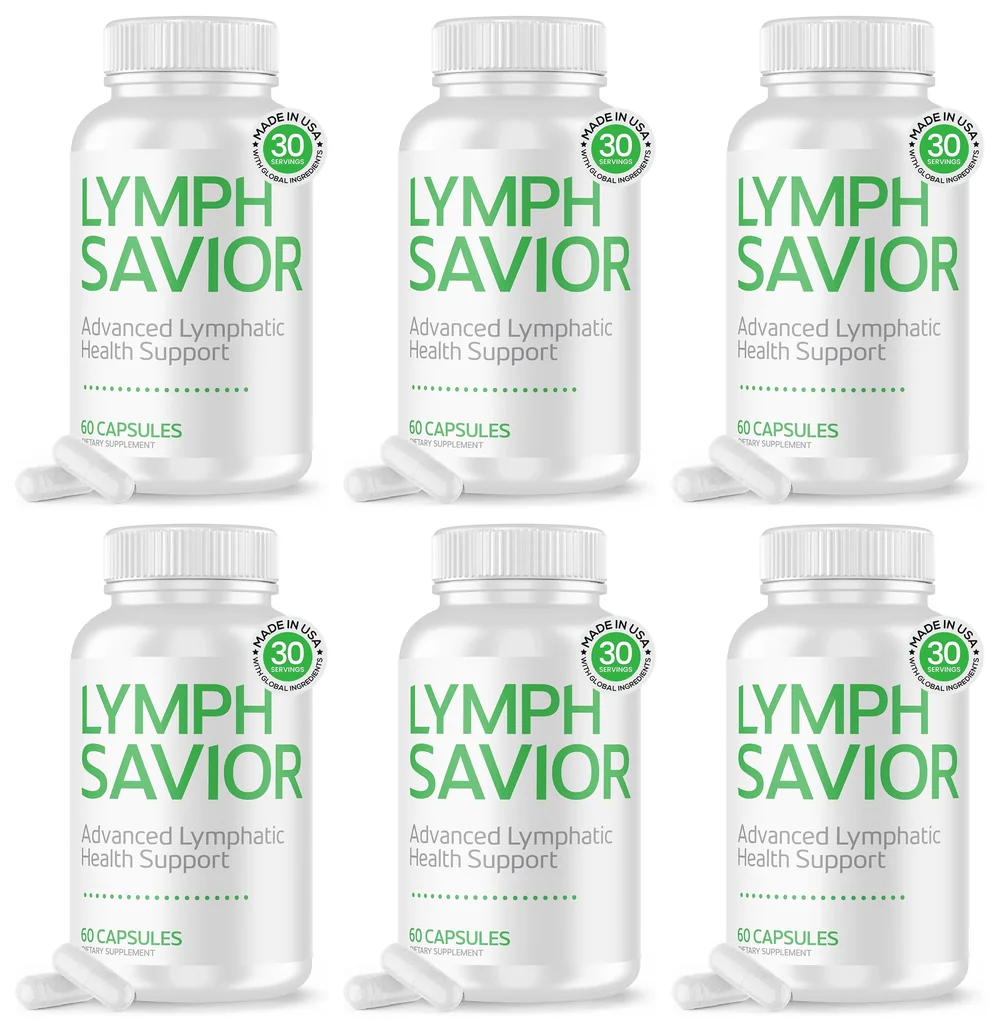
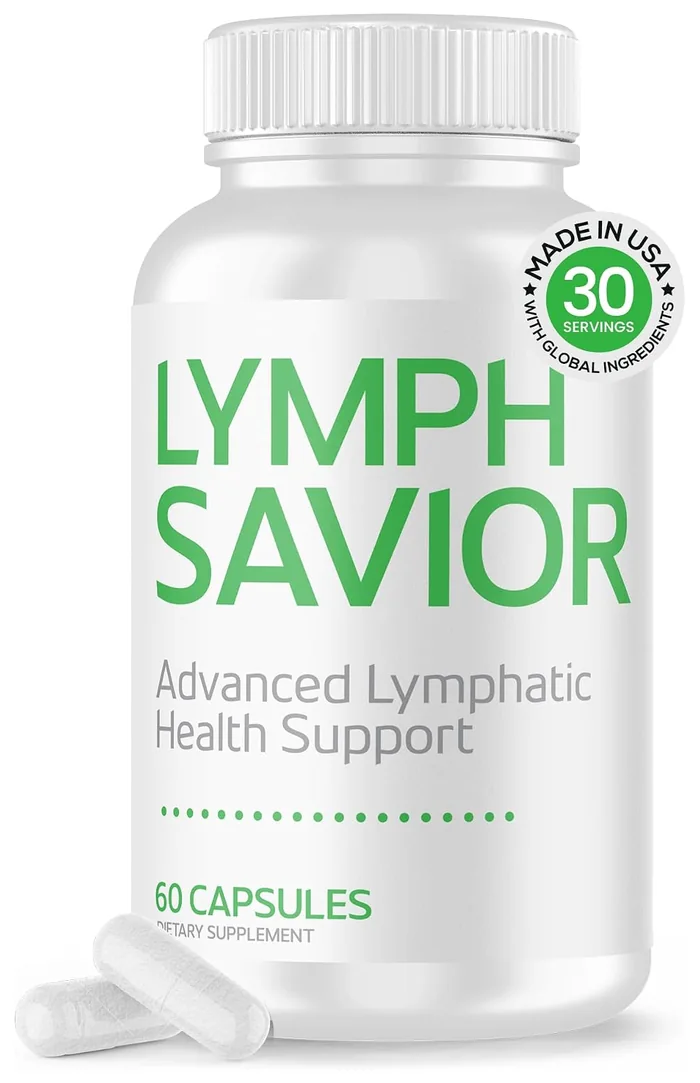
Nothing. The front panel carries the wordmark, the support line, the count, the words dietary supplement and the made-in-USA roundel. The vendor tiles carry the FDA statement along the bottom and nothing else. There is no keep-out-of-reach-of-children line, no pregnancy line, and no instruction to speak to anyone before use.
That is worth stating rather than glossing, because most botanical labels in this category carry at least one of those. Its absence is not a safety claim, and nothing on this page should be read as the manufacturer having assessed the risks and found none.
So the rest of this page is built from the literature on the six plants, at the amounts other people used. This label publishes no amount, which means every risk below is described in kind rather than in size.
If the manufacturer printed a Supplement Facts panel, each risk below could be weighed. A caffeine figure would tell anyone counting caffeine whether this matters. An isoflavone figure would sit next to the 40 mg used in the three-year red clover safety study. Without them, the honest position is that the direction of each risk is known and its size is not.
The four Lymph Savior interactions worth taking seriously
Caffeine, from the yerba mate
Yerba mate is a caffeinated holly leaf, and caffeine is the one pharmacologically active compound in this bottle that most people already have a relationship with. The 2025 meta-analysis of thirteen randomised mate trials lists the adverse events that turned up across them: mucosal irritation, insomnia, tachycardia, angina, headache and gastrointestinal discomfort (Li, 2025).
Practical consequences. Take both capsules in the morning. Count this bottle inside a daily caffeine total. Anyone told to avoid caffeine for a heart rhythm problem, an anxiety disorder or a sleep problem should not be taking it at all, and cannot judge the size of the exposure because the label gives no figure.
Anticoagulation, from the red clover
Red clover contains coumarins as well as its four isoflavones. The standing caution for the plant is about bleeding risk alongside anticoagulants and around surgery, and it is the reason this page names warfarin specifically (NCCIH: red clover).
The three-year randomised safety study of a standardised 40 mg isoflavone product in 401 women found an adverse-event profile no different from placebo (Powles, 2008). That is reassuring at a known amount. This label states no amount, so anyone taking an anticoagulant, aspirin for the heart, or approaching a planned operation should clear the bottle first rather than reason from that study.
Hormone-sensitive conditions, also from the red clover
Isoflavones are phytoestrogens: plant compounds with weak oestrogenic activity. That is exactly why red clover is studied for menopausal symptoms, and nine randomised trials at 37.1 to 160 mg a day found a modest effect on hot flushes (Jiang & Wu, 2026, Yigit & Unsal, 2024).
The longest safety study measured breast density, endometrial thickness and bone density annually for three years and found no adverse effect (Powles, 2008). Anyone with a history of a hormone-sensitive condition, or taking a hormone-blocking medicine, should still raise it before the first capsule.
The Asteraceae family, from the burdock
Burdock is a composite: the same botanical family as ragweed, chamomile, chrysanthemum, artichoke and echinacea. Sensitivity within that family is driven largely by sesquiterpene lactones, and it is one of the best-described plant allergies there is (Paulsen, 2023, Kljucevsek & Kreft, 2025).
Anyone who reacts to ragweed pollen or to chamomile tea should treat this bottle as the same family. It is also the reason the second vendor graphic matters: echinacea, which that graphic names, is another Asteraceae plant.
Two Lymph Savior safety questions that are rarer but worth naming
Liver injury after centella asiatica
Two published case reports describe hepatotoxicity following centella asiatica, one of them in a child (Dantuluri, 2011), the other a case series from a gastroenterology unit (Jorge & Jorge, 2005). The national drug-induced liver injury reference carries an entry for the plant (LiverTox: Centella asiatica).
This is rare against how widely the plant is taken, and it is the reason to stop and get checked if dark urine, yellowing of the eyes or skin, or persistent nausea appear while taking any botanical. It is not a reason for most people to avoid centella.
Adulterated loose burdock root
Two case series, one in JAMA in 1978 and one in a clinical toxicology journal in 1984, describe anticholinergic poisoning traced to commercial burdock root tea contaminated with belladonna root (Bryson, JAMA 1978, Rhoads, 1984).
That is an adulteration story about loose herb bought in bulk, not about a manufactured capsule from a GMP facility, and it is forty years old. It is printed here because it is the clearest argument there is for buying botanicals through a named supply chain with a lot number on the bottle.
Whole horse chestnut seed contains aesculin and is toxic; the extract used in the trials is standardised to aescin and has it removed. The Cochrane review found adverse events usually mild and infrequent across the placebo-controlled trials (Cochrane HCSE, 2012), and the liver-injury reference has an entry for the extract as well (LiverTox: horse chestnut). Nothing on this page is a licence to eat a conker.
When swelling is not a Lymph Savior question at all
Swelling that is new, on one side only, painful, hot, red or spreading. Swelling that arrives with breathlessness or with rapid weight gain. Swelling in one calf after a long journey or an operation. Those are the presentations of a clot, a skin infection and a heart or kidney problem, and every one of them is urgent (NHS: lymphoedema).
The reason this sits on a page about side effects is that the largest risk attached to a lymphatic supplement is not what is in the capsule. It is the fortnight somebody spends waiting for a botanical to work on something that needed looking at on the first day.
Established lymphoedema is a different case again: it has a clinical pathway with fitted compression, decongestive therapy and exercise in it, and published guidance to follow (Torgbenu, 2023, NCI: lymphoedema). A capsule sits outside that pathway.
- Stop and get checked if a rash, swelling of the face or lips, or difficulty breathing follows a dose.
- Stop and get checked if dark urine, jaundice or persistent nausea appear.
- Stop if sleep, heart rate or anxiety change noticeably, and consider the mate.
- Do not double a missed serving. Take the next one at the usual time.
- Keep the bottle and the lot number, LYM-26/LY-1430, if anything is reported.
Who publishes this Lymph Savior website?
Every paper cited in a sentence on this page, in full.
- Torgbenu E, Luckett T, Buhagiar MA, et al. Guidelines relevant to diagnosis, assessment, and management of lymphedema: a systematic review. Adv Wound Care (New Rochelle). 2023;12(1):15-27. https://pubmed.ncbi.nlm.nih.gov/35196892/.
- Jiang W, Wu K. The effectiveness of red clover on hot-flash in menopausal women: a GRADE-assessed systematic review and meta-analysis. Eur J Obstet Gynecol Reprod Biol. 2026;324:115226. https://pubmed.ncbi.nlm.nih.gov/42269521/.
- Powles TJ, Howell A, Evans DG, et al. Red clover isoflavones are safe and well tolerated in women with a family history of breast cancer. Menopause Int. 2008;14(1):6-12. https://pubmed.ncbi.nlm.nih.gov/18380954/.
- Yigit E, Unsal S. Isoflavones obtained from red clover improve both dyslipidemia and menopausal symptoms in menopausal women: a prospective randomized placebo-controlled trial. Climacteric. 2024;27(6):548-554. https://pubmed.ncbi.nlm.nih.gov/39254422/.
- National Center for Complementary and Integrative Health. Red Clover. https://www.nccih.nih.gov/health/red-clover
- Pittler MH, Ernst E. Horse chestnut seed extract for chronic venous insufficiency, Cochrane Database Syst Rev. 2012;11:CD003230. https://pubmed.ncbi.nlm.nih.gov/23152216/.
- LiverTox: Clinical and Research Information on Drug-Induced Liver Injury. Horse Chestnut. Bethesda (MD): National Institute of Diabetes and Digestive and Kidney Diseases. https://www.ncbi.nlm.nih.gov/books/NBK548217/
- Dantuluri S, North-Lewis P, Karthik SV. Gotu Kola induced hepatotoxicity in a child - need for caution with alternative remedies. Dig Liver Dis. 2011;43(6):500. https://pubmed.ncbi.nlm.nih.gov/21334992/.
- Jorge OA, Jorge AD. Hepatotoxicity associated with the ingestion of Centella asiatica. Rev Esp Enferm Dig. 2005;97(2):115-24. https://pubmed.ncbi.nlm.nih.gov/15801887/.
- LiverTox: Clinical and Research Information on Drug-Induced Liver Injury. Centella asiatica. Bethesda (MD): National Institute of Diabetes and Digestive and Kidney Diseases. https://www.ncbi.nlm.nih.gov/books/NBK603561/
- Rhoads PM, Tong TG, Banner W Jr, Anderson R. Anticholinergic poisonings associated with commercial burdock root tea. J Toxicol Clin Toxicol. 1984;22(6):581-4. https://pubmed.ncbi.nlm.nih.gov/6535850/.
- Bryson PD, Watanabe AS, Rumack BH, Murphy RC. Burdock root tea poisoning. Case report involving a commercial preparation. JAMA. 1978;239(20):2157. https://pubmed.ncbi.nlm.nih.gov/642161/.
- Kljucevsek T, Kreft S. Allergic potential of medicinal plants from the Asteraceae family. Health Sci Rep. 2025;8(2):e70398. https://pubmed.ncbi.nlm.nih.gov/39995792/.
- Paulsen E. The sesquiterpene lactone mix: a review of past, present and future aspects. Contact Dermatitis. 2023;89(6):434-441. https://pubmed.ncbi.nlm.nih.gov/37820718/.
- Li D, Yue L, Peng X, et al. Yerba Mate and its impact on glycemic control and metabolic health: a systematic review and meta-analysis, Front Endocrinol (Lausanne). 2025;16:1641592. https://pubmed.ncbi.nlm.nih.gov/41244043/.
- National Cancer Institute. Lymphedema (PDQ) - Patient Version. https://www.cancer.gov/about-cancer/treatment/side-effects/lymphedema/lymphedema-pdq
- NHS. Lymphoedema. https://www.nhs.uk/conditions/lymphoedema/
Order Lymph Savior with the interactions in front of you
Four interactions worth taking seriously, two rarer ones, and a label that prints no caution of its own. 60 days from purchase if it does not suit you.
One bottle $79 · three bottles $207 · 60-day money-back guarantee
Order Lymph Savior On The Official Website60 capsules a bottle · lot LYM-26/LY-1430 · ships from the U.S.