Lymph Savior Official Website › Articles › Label literacy
Label literacy“Doctor Formulated”: The Carton Mark With No Clinician’s Name On It
Ten compliance marks ship with the Lymph Savior carton. “Doctor formulated” is the one this website's own testing and quality page singles out as deserving the most scepticism.
No clinician is named anywhere: not on the carton artwork, not on the seller's page, and not in this website's own paperwork. This article explains what the claim would need to include to mean something, and what it actually tells a buyer as printed.
Lymph Savior is a dietary supplement, not a treatment, and nothing on this page is medical advice. The reviewer named on this website reviews what this website publishes about the product; she did not formulate it, and this article does not suggest otherwise.
Ten marks, and one with no name behind it
This website's testing and quality page reads out all ten compliance marks that ship on the Lymph Savior carton: Manufactured in the USA, GMP, FDA-registered facility, Non-GMO, Natural ingredients, Money back, Naturally gluten free, Dairy free, Vegetarian, and Doctor formulated. All ten live on the artwork alone; none of them is named anywhere in this website's own written paperwork from the manufacturer.
Most of the ten describe something concrete even without a certifying body attached: a factory location, a manufacturing standard, a recipe fact. “Doctor formulated” is different in kind. It is a claim about a person, specifically that a clinician had a hand in designing the formula, and a claim about a person is either true of a named individual or it is not verifiable at all. The testing and quality page states plainly that this is the mark on the carton that deserves the most scepticism, for exactly that reason.

What “doctor formulated” would need to mean
For the phrase to carry real information, at minimum it would need three things that are absent here: a named clinician, a credential that can be checked, and some account of what that person actually did, whether that is selecting the six botanicals, setting the proportions, or signing off on a finished recipe someone else wrote.
None of the three is present anywhere in the material available to this website. The carton artwork prints the phrase and a stethoscope icon, and nothing else. The seller's product page does not name a formulator. This website's own vendor paperwork, the written ingredient list and the detailed graphic covered in a related article, name no clinician either. A phrase built from three missing parts is not evidence the formula was not touched by a doctor; it is evidence that the claim, as printed, cannot be checked by a buyer in either direction.
The one clinician this website does name, and what she reviews
This website does name a clinician: Dr. Carolyn Finnegan, a functional medicine practitioner, who reviews what this website publishes about Lymph Savior. The about page states her role precisely: she reads the product copy, the facts read from the label artwork, and the ingredient and safety sections for accuracy and for how they word safety, after the Lymph Savior Team writes each page first.
That is a specific, bounded role, and it is a different role from formulating a supplement. Dr. Finnegan reviews what this website says about the capsule; she does not claim to have designed the capsule itself, and nothing on this website represents her as the “doctor” behind the “doctor formulated” mark on the carton. Those are two separate claims, made by two separate parties, about two separate things, and collapsing them into one would be exactly the kind of imprecision this article is arguing against.
How this mark differs from GMP and Made in USA
The other marks on the carton describe something that can, in principle, be checked against a registry or a factory address, even without this website's paperwork naming it. The testing and quality page explains GMP as a standard for how a facility handles material, cleaning, record-keeping and batch control, which says nothing about the formula itself but is at least a known standard that facilities are audited against. FDA-registered facility means a factory is on a federal list, which is a listing rather than an inspection result, but it is still something that exists as a checkable fact at the facility level.
| Mark | What it describes | What would make it checkable |
|---|---|---|
| GMP | A facility's handling, cleaning and record-keeping standard | The certifying body's name and the facility's own registration |
| FDA-registered facility | A factory's listing with the agency | The facility's registration number, checkable against the FDA's own database |
| Made in USA | Where assembly happened | A specific facility address, which the carton does not print |
| Doctor formulated | A claim about who designed the recipe | A named clinician, with a credential, and a stated role in the formulation |
Three of the four describe a fact that exists somewhere, even if this website cannot confirm it directly. The fourth describes a person who, on the evidence available, may not exist as a named individual at all.
Why a claim like this is easy to print and hard to check
A phrase like “doctor formulated” costs nothing to print and requires no registration, no facility number, and no third-party certifier to back it up, unlike GMP or an FDA facility listing. It sits in the same category as “natural ingredients,” which the testing and quality page calls the least regulated word on the carton: accurate in a loose, plain-language sense, and otherwise unconstrained by any outside check.
That asymmetry, cheap to assert and expensive to verify, is the reason a reader should treat an unnamed-clinician claim differently from a claim tied to a registry, a facility, or a checkable standard. It is not proof the claim is false. It is a reason the claim cannot currently be checked true.
It is worth describing, in general terms, what would move a “doctor formulated” claim out of this category entirely, because the gap is structural rather than a matter of degree. A checkable version of the claim would name the clinician by their full name, state a credential that is verifiable against a licensing board or professional register, such as an MD, ND, DO or RPh with a jurisdiction attached, and describe in plain terms what role that person actually played, selecting the ingredients, setting the ratios, or reviewing a finished recipe someone else wrote. Any one of those three elements missing leaves a reader able to confirm nothing; all three missing, as is the case on this carton, leaves nothing to check at all. This article does not suggest that every “doctor formulated” claim in this product category is empty merely because this one carton's version is unverifiable; it suggests that each one should be read individually, against this same three-part test, rather than taken as a category of claim that can be trusted or dismissed as a block.
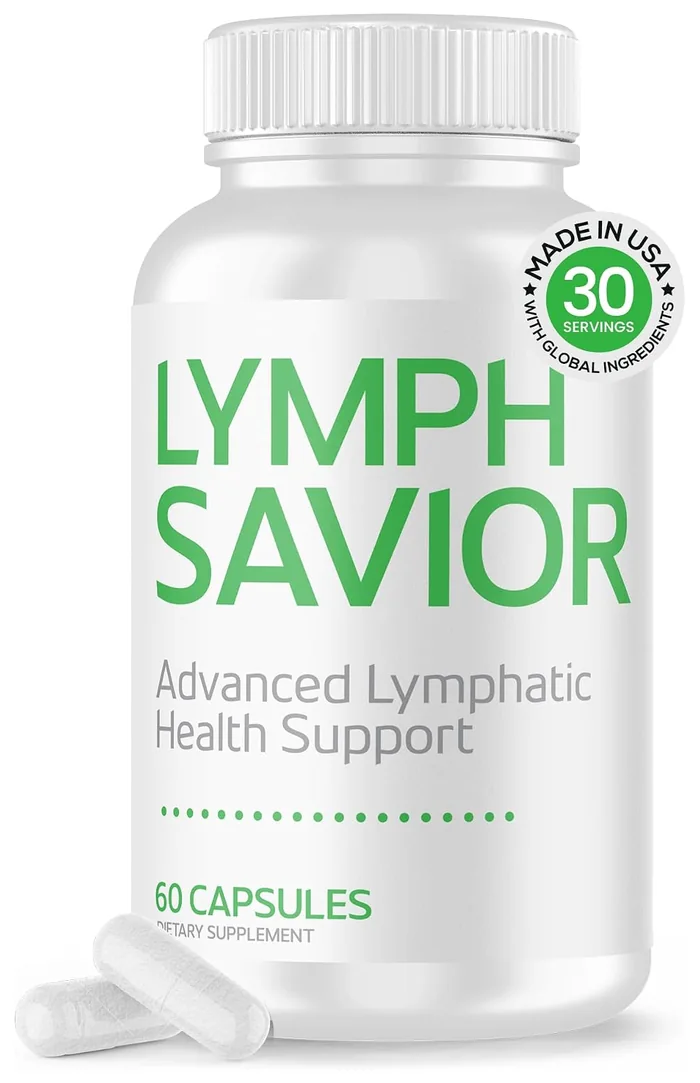
Lymph Savior, with the marks read out one at a time
Ten carton marks, one of them unverifiable as printed, and a website that says so rather than repeating it as settled.
One bottle $79 · three bottles $207 · 60-day money-back guarantee
Order Lymph Savior On The Official Website60 capsules a bottle · lot LYM-26/LY-1430 · ships from the U.S.
What federal guidance says about claims like this one
Dietary supplement marketing in the United States is bound generally by the requirement that a claim be truthful and not misleading, under the FTC's own compliance guidance for health products, and by the FDA's dietary supplement labeling rules more broadly. Neither agency maintains a specific registry of “doctor formulated” claims the way a facility is registered for manufacturing; the obligation to have substantiation for any claim sits with the company making it, in the same way the structure/function disclaimer obliges a company to certify it holds substantiation without that substantiation being published (FTC health products compliance guidance).
In practice, that means a claim like this one lives or dies on the seller's own paperwork, which this website does not have for this particular mark. A related article on this website covers the specific federal rule behind the FDA disclaimer printed on every page here, which is a narrower and better-documented example of the same general point: a requirement to have substantiation is not the same thing as a requirement to publish it.
There is a useful contrast between the two regimes. The structure/function disclaimer is required by a specific, numbered regulation, with a specific sentence, a specific typesize and a filing deadline attached to it; a reader can go and read 21 CFR 101.93 in full and know exactly what was supposed to happen. “Doctor formulated” sits under the general truthful-and-not-misleading standard that applies to marketing claims broadly, with no equivalent numbered rule specifying what the phrase itself must include. That is not a loophole unique to this product; it is how a very large amount of supplement marketing language works across the category, and it is exactly why a specific, named, checkable claim is worth more than a generic one, on any carton.
What a reader should do when a carton says doctor formulated
- Look for a named clinician with a stated credential before giving the phrase any weight at all.
- Treat an unnamed version of the claim as unverifiable rather than as false; the honest position is that it cannot currently be checked either way.
- Keep “doctor formulated” separate from this website's own named reviewer. Dr. Carolyn Finnegan reviews these pages; she is not presented as, and does not claim to be, the formulator behind the carton mark.
- Ask the manufacturer directly for the formulator's name and credential if the claim matters to a purchase decision, and expect a specific answer rather than a repeated slogan.
- Apply the same scrutiny to “doctor formulated” marks on other products in this category; an unnamed clinician on one carton is not a reason to assume every such claim, everywhere, is empty, but it is a reason to ask the same question every time.
The testing and quality page reads out the other nine marks on the same carton, and the about page sets out exactly what this website's named reviewer does and does not cover.
None of this is a statement that Lymph Savior's formula was not, in fact, put together with input from a qualified clinician somewhere along the way. It may well have been. The point of this article is narrower and more durable than any single verdict on this one bottle: a claim that cannot currently be checked should be treated as unchecked, not quietly upgraded to checked because the alternative, scepticism about a stethoscope icon, feels unkind. A carton is not obliged to make its strongest claims the easiest ones to verify, and a reader is not obliged to assume it has.
- Federal Trade Commission. Health Products Compliance Guidance. https://www.ftc.gov/business-guidance/resources/health-products-compliance-guidance
- U.S. Food and Drug Administration. Dietary Supplement Labeling Guide. https://www.fda.gov/food/dietary-supplements-guidance-documents-regulatory-information/dietary-supplement-labeling-guide