Lymph Savior Official Website › Choosing A Formula
Choosing A FormulaChoosing A Lymphatic Supplement: Eight Questions, And One Scored Answer
By the Lymph Savior Team at Lymphsaviior · Reviewed by Dr. Carolyn Finnegan, functional medicine practitioner · Revised
Eight questions that separate a considered formula from a list of plants on a label.
Does it print an amount. Was the amount studied. In whom. What form. Who should not take it. What does it claim. What does the seller stand behind. And what does it cost a day. The product this desk sells is scored against every one of them at the foot of this page.
A checklist that works on any bottle on this shelf, including the ones this desk does not sell.
The eight questions
Does the label print an amount for each ingredient?
The first question and by some distance the most useful. A Supplement Facts panel prints a serving size and an amount for each ingredient or for the blend (FDA supplement labeling guide). Without it, nothing else on this list can be checked. A proprietary blend that gives a total and no breakdown is a partial answer; no panel at all is no answer.
Has that amount been studied in people?
An amount on a label is only useful if somebody has tested it. For horse chestnut the studied figure is 50 mg of aescin twice daily (Diehm, Lancet 1996); for centella it is 60 to 120 mg a day of the triterpenic fraction (Incandela, 2001). If a label prints 25 mg of something whose trials used 600 mg, the number tells you it is decorative.
Studied in whom, and for what?
This is where this category quietly borrows. The best-evidenced plants on a lymphatic shelf were tested in chronic venous insufficiency, which is a vein problem (Gloviczki, 2025). Red clover’s trials are in menopausal hot flushes (Jiang & Wu, 2026). Neither is a lymphatic result, and a seller who says so is worth more than one who does not.
Is the form the same as the form that was studied?
Burdock’s human trials used root steeped as a tea, three cups a day at 2 g a cup (Maghsoumi-Norouzabad, 2016). A powder in a capsule is a different preparation, and a hot-water extract is not the same as a dry powder. Ask whether the trial and the bottle are even the same thing.
Who should not take it, and does the label say?
A label that prints no caution has not told you there is nothing to worry about. Caffeinated leaves, phytoestrogens, coumarins and Asteraceae plants all turn up on this shelf, and each of them matters to somebody.
What does it actually claim?
Structure and function claims are permitted and are deliberately vague (FDA structure/function claims). Claims about flushing toxins, draining the lymphatic system or reducing swelling have gone further than that, and a product making them is telling you how it reads its own evidence.
What does the seller stand behind?
A named return window, a telephone number that is answered, a lot number you can quote, and a stated position on who pays return postage. Those are checkable before you spend anything, unlike everything in the capsule.
What does it cost a day, against the alternative?
Per day, not per bottle, and against a single standardised extract of the best-evidenced plant in the formula. A six-plant capsule is a convenience purchase, and convenience is worth paying for as long as you know that is what you are buying.
Scoring Lymph Savior against the same eight questions
| Question | Answer for this product | Score |
|---|---|---|
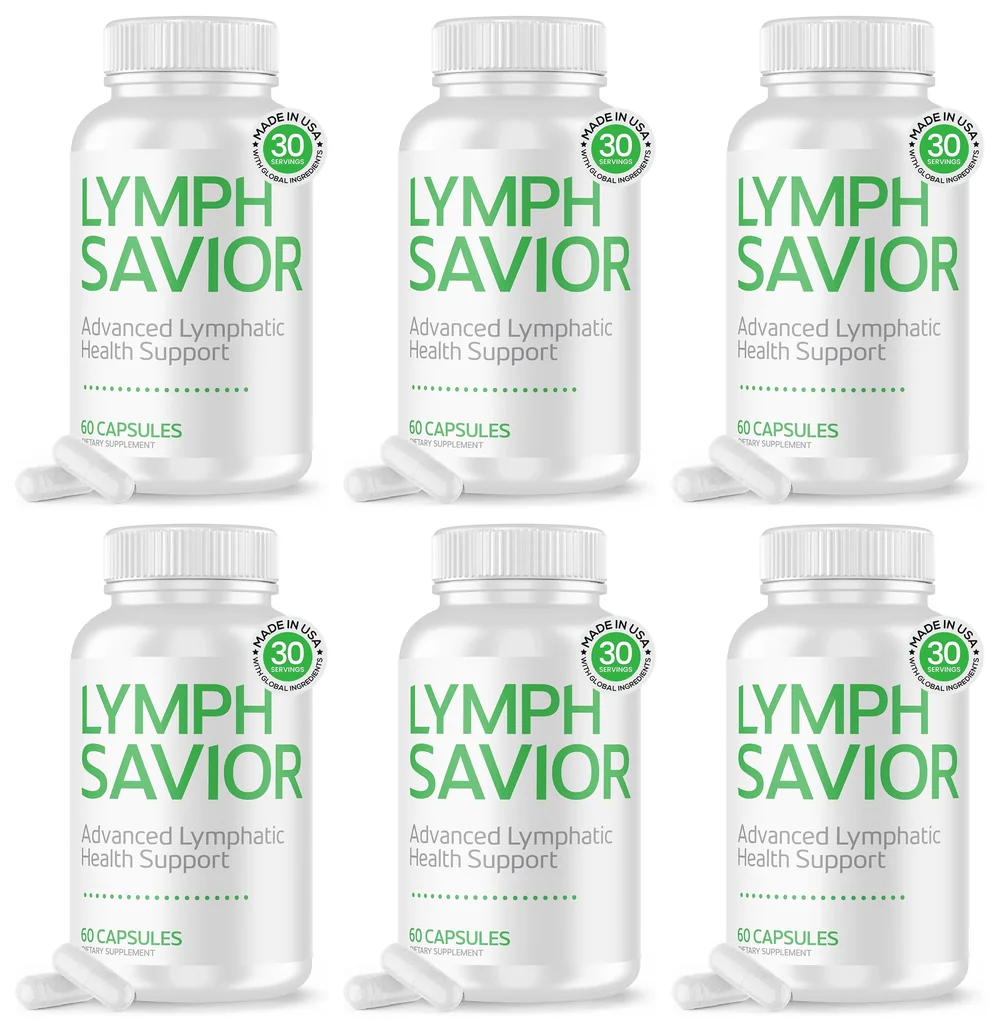
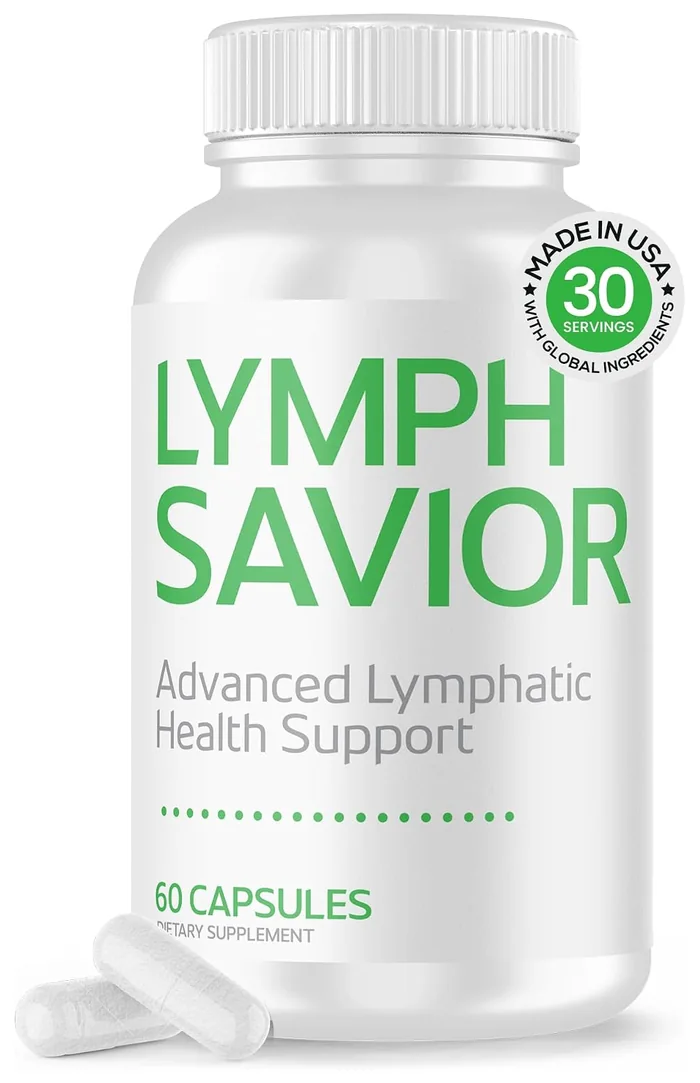
| Does the label print an amount? | No. The artwork supplied shows no Supplement Facts panel, and neither vendor graphic nor the seller’s page adds one. | Fails |
| Has the amount been studied? | Unanswerable, because there is no amount to compare. The studied figures for two of the six plants are printed on this website instead. | Cannot be assessed |
| Studied in whom? | Horse chestnut and centella in chronic venous insufficiency; red clover in menopausal symptoms; yerba mate in cardiometabolic markers; burdock in joint inflammation; red root in nothing indexed. | Partly, and borrowed |
| Is the form the same? | For horse chestnut and centella, yes, both were studied as oral extracts. For burdock, no: its trials used a tea. | Mixed |
| Who should not take it? | The label prints no caution. This website names five groups from the literature on the six plants. | Fails on the label, answered here |
| What does it claim? | Advanced lymphatic health support, plus three descriptive tile claims. No disease claim anywhere. | Passes |
| What does the seller stand behind? | 60 days from purchase, an answered order line, lot LYM-26/LY-1430, and a stated position that return postage is the buyer’s. | Passes |
| What does it cost a day? | $1.63 to $2.63, against roughly $0.50 to $1.20 for a standardised single-plant horse chestnut extract. | Fair, not cheap |
Three passes, two clear fails and three mixed. That is a considered botanical formula sold with less information than it should carry, and it is the same conclusion the editorial score on the home page reaches by a different route.
Printing that table on a page that sells the product is the point of the exercise. A checklist that every product in the catalogue passes is not a checklist; it is a brochure with tick marks.
The two failures are both about information rather than about the plants. The manufacturer could fix the first with one photograph of a panel, and the second with one printed caution line.
Four things worth ignoring when comparing bottles
The ingredient count
Six plants is not better than three, and eleven is not better than six. More names on a label with no amounts beside them means less of each, not more benefit.
A seal you cannot trace to an issuer
Most compliance marks describe a factory or a sourcing decision. A doctor-formulated mark that names no clinician is the emptiest of them, and it is common across this shelf.
A struck-through comparison price
Usually the single-unit price multiplied by the pack size, which describes the multi-buy discount rather than a reduction. Work it out; it takes four seconds.
A five-star average with no dates on it
A review written at day ten in a category where trials run twelve weeks is a review of swallowing a capsule. If a roster does not print how long each reviewer took the product, it is telling you less than it appears.
Who publishes this Lymph Savior website?
Every paper cited in a sentence on this page, in full.
- Jiang W, Wu K. The effectiveness of red clover on hot-flash in menopausal women: a GRADE-assessed systematic review and meta-analysis. Eur J Obstet Gynecol Reprod Biol. 2026;324:115226. https://pubmed.ncbi.nlm.nih.gov/42269521/.
- Diehm C, Trampisch HJ, Lange S, Schmidt C. Comparison of leg compression stocking and oral horse-chestnut seed extract therapy in patients with chronic venous insufficiency, Lancet. 1996;347(8997):292-4. https://pubmed.ncbi.nlm.nih.gov/8569363/.
- Gloviczki ML, Kakkos SK, Urbanek T, et al. The role of venoactive compounds in the treatment of chronic venous disease. J Vasc Surg Venous Lymphat Disord. 2025;13(4):102258. https://pubmed.ncbi.nlm.nih.gov/40348378/.
- Incandela L, Belcaro G, De Sanctis MT, et al. Total triterpenic fraction of Centella asiatica in the treatment of venous hypertension: a clinical, prospective, randomized trial using a combined microcirculatory model. Angiology. 2001;52 Suppl 2:S61-7. https://pubmed.ncbi.nlm.nih.gov/11666126/.
- Maghsoumi-Norouzabad L, Alipoor B, Abed R, et al. Effects of Arctium lappa L. (Burdock) root tea on inflammatory status and oxidative stress in patients with knee osteoarthritis, Int J Rheum Dis. 2016;19(3):255-61. https://pubmed.ncbi.nlm.nih.gov/25350500/.
- U.S. Food and Drug Administration. Structure/Function Claims. https://www.fda.gov/food/food-labeling-nutrition/structurefunction-claims
- U.S. Food and Drug Administration. Dietary Supplement Labeling Guide. https://www.fda.gov/food/dietary-supplements-guidance-documents-regulatory-information/dietary-supplement-labeling-guide
Order Lymph Savior with the checklist already applied
Three passes, two fails and three mixed answers, printed on the page that sells it. There are 60 days from purchase to change your mind.
One bottle $79 · three bottles $207 · 60-day money-back guarantee
Order Lymph Savior On The Official Website60 capsules a bottle · lot LYM-26/LY-1430 · ships from the U.S.