Lymph Savior Official Website › Articles › The evidence
The evidenceWhat Actually Moves Lymph: The Evidence, None Of Which Is Sold On This Website
The best-evidenced intervention in this subject is lifting weights.
A year-long randomised trial in 141 women with arm lymphoedema found that progressive weight lifting did not worsen swelling and halved the rate of specialist-assessed flare-ups. The one oral compound tested to the same standard did not work and injured livers. Neither is a capsule.
Lymph Savior is a dietary supplement, not a treatment. Nothing here is medical advice. Swelling that is new, on one side only, painful, hot or spreading needs assessment the same day rather than a purchase, and the NHS page on lymphoedema sets out what is worth reporting.
Lymph has no pump behind it
Blood has a heart. Lymph has valves, vessel walls that contract on their own, and whatever squeezing the body around it happens to be doing.
The collecting vessels are divided by one-way valves into short segments, and the muscle in their walls contracts rhythmically to push fluid from one segment to the next. That intrinsic pump runs whether you move or not (Razavi, 2025, Breslin, 2023).
On top of it sit the extrinsic forces: skeletal muscle contracting around the vessels, arterial pulsation, the pressure swing of breathing at the top of the chain where the thoracic duct empties into the vein, and gravity working for or against depending on which way the limb is pointing (Davis, Annu Rev Physiol 2025).
Everything with strong evidence behind it in this subject works on that second list. That is not a coincidence and it is the through-line of this article.
The weight-lifting trial
For years, women with lymphoedema after breast cancer treatment were told not to lift anything heavy with the affected arm. The advice was cautious, widely given, and never properly tested.
Then it was tested. One hundred and forty-one breast cancer survivors with stable arm lymphoedema were randomised to twice-weekly progressive weight lifting for a year, wearing a well-fitted compression garment, or to a control group. The primary outcome was change in arm and hand swelling at twelve months, measured by water displacement.
| Outcome at 12 months | Weight lifting | Control |
|---|---|---|
| Proportion with a 5 per cent or greater increase in limb swelling | 11 per cent | 12 per cent |
| Lymphoedema flare-ups assessed by a specialist | 14 per cent | 29 per cent |
| Self-reported symptom severity | Improved significantly | No change |
| Upper and lower body strength | Improved significantly | No change |
| Serious adverse events related to the intervention | None | None |
Figures as reported (Schmitz, NEJM 2009). A separate randomised trial tested heavier loads specifically and found no acute worsening (Cormie, 2013).
That is a remarkable result and it is worth sitting with. An intervention that had been prohibited turned out to halve the rate of flare-ups, improve symptoms and improve strength, at no cost beyond a gym membership and a compression sleeve. A follow-up analysis found physical function improved as well (Brown, JCO 2015).
Nothing sold on this shelf, by anybody, has a result of that quality behind it.
Compression, and the rest of the clinical pathway
The compression garment in that trial was not incidental. Fitted compression is the backbone of lymphoedema management and it is the comparator other things get measured against. It is also what horse chestnut seed extract was set against in its best trial, which says something about how seriously it is taken (Diehm, Lancet 1996).
- Fitted compression garments, as part of published clinical guidance (Torgbenu, 2023).
- Decongestive therapy delivered by a trained practitioner.
- Skin care, because cellulitis is the commonest serious complication.
- Exercise, which the trial above moved from prohibited to recommended.
- Pneumatic compression devices, meta-analysed in 2025 with a measurable effect on limb volume (Panchik, 2025).
- Manual lymphatic drainage, where a systematic review found the evidence mixed and the added benefit over standard care unclear (Wanchai, 2021).
Two things stand out about that list. The first is that most of it costs less over a year than a six-bottle supplement pack. The second is that the most heavily marketed item on it, manual drainage, is also the one with the weakest support.
Lymph Savior, with the numbers this desk does have
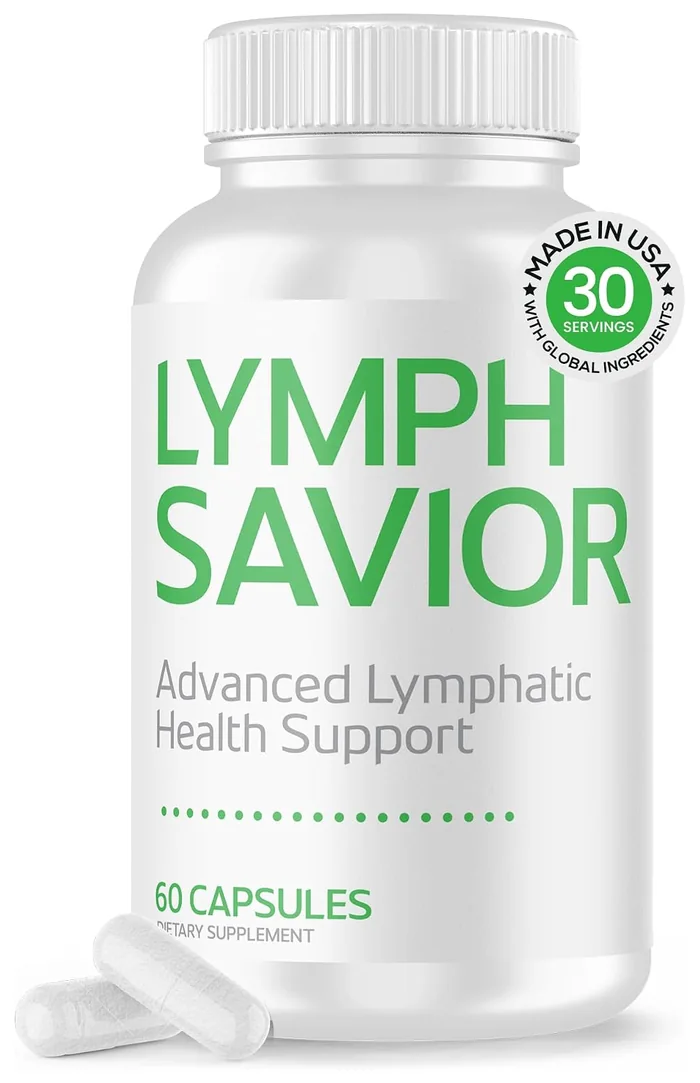
Six botanicals, two capsules a day, sixty to a bottle, and every trial amount on this website attributed to the trial it came from.
One bottle $79 · three bottles $207 · 60-day money-back guarantee
Order Lymph Savior On The Official Website60 capsules a bottle · lot LYM-26/LY-1430 · ships from the U.S.
The oral compound that was tested properly
There is one oral treatment for lymphoedema that was taken seriously enough to be tested at the standard the weight-lifting trial used, and the result deserves to be much better known than it is.
Coumarin, a benzopyrone, had been reported to reduce lymphoedema by increasing the breakdown of protein accumulating in the tissue. In a crossover trial, 140 women with chronic arm lymphoedema after breast cancer treatment took 200 mg of oral coumarin twice daily for six months, then placebo for six months, or the same in the opposite order.
| What was measured | Result |
|---|---|
| Arm volume at 6 and 12 months | Virtually identical whichever order the treatments came in. |
| Change in affected arm volume over six months | Up 21 ml on placebo, up 58 ml on coumarin. |
| Said it helped a moderate amount or more | 15 per cent on coumarin, 10 per cent on placebo. |
| Serologic evidence of liver toxicity | 6 per cent of the women on coumarin. |
As reported in the New England Journal of Medicine (Loprinzi, NEJM 1999). The Cochrane review of benzo-pyrones reached the same conclusion from the wider literature (Cochrane benzo-pyrones, 2004).
It is worth saying clearly what this does and does not imply about a botanical capsule. None of the six plants in Lymph Savior is coumarin. This bottle has never been tested and nothing here inherits that trial.
What it establishes is the category’s own track record. When an oral agent from this family of ideas was finally examined properly, it did not work and it carried a safety signal. That is the context every oral product on this shelf is sold into, including the one this website sells.
Where a botanical capsule sits in all this
Honestly: alongside, and second. Two of the six plants on this label have dose-specific human trials, and both were run in chronic venous insufficiency rather than lymphoedema (Cochrane HCSE, 2012, Chong & Aziz, 2013). That is a neighbouring system with different plumbing.
That is not nothing. A result in venous disease is a real result, and for somebody whose legs ache by evening with visible varicose veins it may be closer to the point than anything else on the shelf. It is simply not the same thing as evidence for lymphatic drainage, and a website that sells the product should be the first to say so rather than the last.
- Walking is free and has a mechanism nobody disputes.
- A fitted pair of compression socks costs less than one bottle and lasts months.
- Body weight and salt change tissue fluid before the lymphatics are involved at all.
- Sleeping with the legs raised costs nothing and works by gravity.
- A capsule is an addition to that list, not a replacement for any item on it.
Why this category leans so hard on one word
Drainage is an unusually good word for marketing, and the reason is worth understanding before reading any label on this shelf, including this one.
It describes something real. The lymphatic system genuinely drains fluid from the tissues and returns it to the blood, and that is a textbook mechanism rather than an invention (Davis, Annu Rev Physiol 2025). So a product using the word is not making anything up.
It is also unfalsifiable as used. Nobody measures their own lymphatic transport, no consumer test exists for it, and there is no number a buyer can check at week eight. A claim about a system you cannot observe is a claim that can never be shown to have failed.
The honest version of the same idea is narrower and less appealing: the system is real, it responds mainly to mechanical forces, and the oral agents tested against it have not done well (Loprinzi, NEJM 1999). A label that says lymphatic health support rather than drains the lymphatic system is staying inside what it can defend, which this one does.
- Drains, flushes and cleanses describe outcomes nobody can measure at home.
- Supports is the permitted structure and function phrasing, and it is vague by design.
- Reduces swelling would be a treatment claim, and swelling has causes that need diagnosing.
- The word to look for on a label is not a verb at all. It is a number.
The honest answer to what should I do
- If the swelling is new, one-sided, painful, hot or spreading, be seen the same day. That is a clot or an infection until proven otherwise (NHS: lymphoedema).
- If you have been told you have lymphoedema, the pathway above is the answer and a supplement is not part of it (NCI: lymphoedema).
- If it is ordinary end-of-day swelling in both legs, start with walking, compression, salt and weight. They are the cheapest and best-evidenced options and they are not being sold to you by anybody.
- If you want to add a botanical on top of that, do it on top rather than instead, and read the label for an amount before you buy anything.
- If you want six plants in one capsule and can accept that the amounts are not published, the ladder is here with a 60-day window from purchase.
Publishing the first three of those on a page that sells a supplement costs sales, which is the point. A reader who leaves this website and buys a pair of compression socks instead has been better served than one who bought six bottles on the strength of a headline, and the second kind asks for a refund at week three anyway.
- Loprinzi CL, Kugler JW, Sloan JA, et al. Lack of effect of coumarin in women with lymphedema after treatment for breast cancer. N Engl J Med. 1999;340(5):346-50. https://pubmed.ncbi.nlm.nih.gov/9929524/.
- Badger C, Preston N, Seers K, Mortimer P. Benzo-pyrones for reducing and controlling lymphoedema of the limbs. Cochrane Database Syst Rev. 2004;(2):CD003140. https://pubmed.ncbi.nlm.nih.gov/15106192/.
- Schmitz KH, Ahmed RL, Troxel A, et al. Weight lifting in women with breast-cancer-related lymphedema. N Engl J Med. 2009;361(7):664-73. https://pubmed.ncbi.nlm.nih.gov/19675330/.
- Cormie P, Pumpa K, Galvao DA, et al. Is it safe and efficacious for women with lymphedema secondary to breast cancer to lift heavy weights during exercise: a randomised controlled trial. J Cancer Surviv. 2013;7(3):413-24. https://pubmed.ncbi.nlm.nih.gov/23604998/.
- Brown JC, Schmitz KH. Weight lifting and physical function among survivors of breast cancer: a post hoc analysis of a randomized controlled trial. J Clin Oncol. 2015;33(19):2184-9. https://pubmed.ncbi.nlm.nih.gov/25964257/.
- Wanchai A, Armer JM. Manual lymphedema drainage for reducing risk for and managing breast cancer-related lymphedema after breast surgery: a systematic review. Nurs Womens Health. 2021;25(5):377-383. https://pubmed.ncbi.nlm.nih.gov/34461070/.
- Panchik D, Klepper D, Knecht K, et al. Effect of advanced pneumatic compression devices in the treatment of lymphedema: a systematic review and meta-analyses. Lymphology. 2025;58(3):135-144. https://pubmed.ncbi.nlm.nih.gov/41406422/.
- Torgbenu E, Luckett T, Buhagiar MA, et al. Guidelines relevant to diagnosis, assessment, and management of lymphedema: a systematic review. Adv Wound Care (New Rochelle). 2023;12(1):15-27. https://pubmed.ncbi.nlm.nih.gov/35196892/.
- Davis MJ, Zawieja SD, King PD. Transport and immune functions of the lymphatic system. Annu Rev Physiol. 2025;87:151-172. https://pubmed.ncbi.nlm.nih.gov/39441893/.
- Breslin JW. Lymphatic clearance and pump function. Cold Spring Harb Perspect Med. 2023;13(9):a041187. https://pubmed.ncbi.nlm.nih.gov/35667711/.
- Razavi MS, Munn LL, Padera TP. Mechanics of lymphatic pumping and lymphatic function. Cold Spring Harb Perspect Med. 2025;15(1):a041171. https://pubmed.ncbi.nlm.nih.gov/38692743/.
- Pittler MH, Ernst E. Horse chestnut seed extract for chronic venous insufficiency, Cochrane Database Syst Rev. 2012;11:CD003230. https://pubmed.ncbi.nlm.nih.gov/23152216/.
- Diehm C, Trampisch HJ, Lange S, Schmidt C. Comparison of leg compression stocking and oral horse-chestnut seed extract therapy in patients with chronic venous insufficiency, Lancet. 1996;347(8997):292-4. https://pubmed.ncbi.nlm.nih.gov/8569363/.
- Chong NJ, Aziz Z. A systematic review of the efficacy of Centella asiatica for improvement of the signs and symptoms of chronic venous insufficiency, Evid Based Complement Alternat Med. 2013;2013:627182. https://pubmed.ncbi.nlm.nih.gov/23533507/.
- National Cancer Institute. Lymphedema (PDQ) - Patient Version. https://www.cancer.gov/about-cancer/treatment/side-effects/lymphedema/lymphedema-pdq
- NHS. Lymphoedema. https://www.nhs.uk/conditions/lymphoedema/