Lymph Savior Official Website › Articles › Safety literacy
Safety literacyTwo Liver Case Reports On Centella asiatica, And What A Case Report Actually Proves
Two published case reports describe liver injury after taking centella asiatica, one of them in a child. This article reads both in full and asks what a case report can and cannot establish.
This is a question about evidence, not about efficacy. This website's side-effects page already names both reports as rare against how widely the plant is taken; this article stays inside that safety literature rather than revisiting the separate question of whether centella works for anything.
Lymph Savior is a dietary supplement, not a treatment. Stop and get checked if dark urine, yellowing of the eyes or skin, or persistent nausea appear while taking any botanical, and see this website's clinician-first table for situations that need medical attention before a supplement question.
The two reports behind the caution on this website
Centella asiatica, gotu kola, is the fourth botanical named on the Lymph Savior label. This website's ingredients page credits it with the second-best human evidence on this label after horse chestnut seed, in chronic venous insufficiency. The side-effects page separately names two published case reports of liver injury following centella use, plus an entry in the national LiverTox reference, and calls this rare against how widely the plant is taken.
This article reads both case reports directly rather than at second hand, because a case report is a specific kind of evidence with its own rules, and those rules are worth setting out plainly rather than leaving “case report” to sound like a vaguer, lesser version of a clinical trial.
Jorge and Jorge, 2005: three women, one re-exposure
The larger of the two reports is a case series from a gastroenterology department in Mendoza, Argentina, describing three women, aged 61, 52 and 49, who developed jaundice after taking centella asiatica for 30, 20 and 60 days respectively (Jorge & Jorge, 2005).
The published laboratory values are specific: alanine aminotransferase at 1,193, 1,694 and 324 U/L across the three women; alkaline phosphatase at 503, 472 and 484 U/L; bilirubin at 4.23, 19.89 and 3.9 mg/dL. The first patient also tested positive for two autoimmune liver markers, anti-smooth-muscle antibody at 1:160 and anti-mitochondrial antibody at 1:320. Liver biopsy in the three women showed granulomatous hepatitis with marked necrosis and apoptosis, chronic hepatitis with cirrhotic transformation and intense inflammatory activity, and granulomatous hepatitis respectively.
All three women improved after stopping centella and starting ursodeoxycholic acid at 10 mg/kg/day. Two details in the report strengthen the case for a causal link specifically. The first patient took centella again after recovering, and the liver injury recurred, a deliberate or incidental re-challenge that is one of the stronger pieces of evidence a case report can offer. The second patient had also taken the herb a year before her reported episode, a pattern of repeated exposure preceding injury. The authors' own discussion is appropriately cautious: they note Germander, Skullcap and Glycyrrhizin as other plants with related triterpenic compounds linked to liver injury by similar mechanisms, and state they cannot rule out that simply stopping centella, rather than the ursodeoxycholic acid, accounted for the improvement.
Dantuluri, 2011: a single case, in a child
The second report is a short clinical letter in Digestive and Liver Disease, titled “Gotu Kola induced hepatotoxicity in a child, need for caution with alternative remedies” (Dantuluri, 2011). As published and indexed, the letter carries no separate abstract text in the National Library of Medicine's record beyond its title and citation, which is common for short clinical letters of this kind rather than full case reports with a structured abstract.
What can be stated with confidence from the indexed record is the letter's title and its placement: a case of liver injury attributed to gotu kola in a paediatric patient, published as a clinical communication intended specifically to flag caution around alternative remedies in children. This website does not invent the child's age, dose, or laboratory values, because the indexed abstract does not state them, and a safety article that fills gaps with plausible-sounding detail is doing exactly what this article is arguing against.
What a case report is built to show
A case report, or a small case series like Jorge and Jorge's three patients, is a clinician's structured written account of what happened to one patient or a small number of patients, in the order it happened, with whatever laboratory and biopsy evidence was gathered along the way. Its strength is specificity: real dates, real laboratory numbers, a real biopsy result, and in the Jorge and Jorge series, a real re-challenge.
A re-challenge, where a patient who improved after stopping a substance is exposed to it again and the injury recurs, is one of the more persuasive single pieces of evidence a case report can contain, because it rules out coincidence happening twice by chance to the same person in the same direction. That is exactly what happened to the first of Jorge and Jorge's three patients.
What a case report cannot show
What a case report, however well documented, cannot do is establish how often an event happens across everyone who takes a substance. There is no comparison group of centella users who did not get sick, no count of the total number of people who took the same preparation over the same period without incident, and no systematic effort to find every case that occurred rather than the ones that happened to reach a clinician who wrote them up and a journal that published them.
| What a case report shows | What it cannot establish alone |
|---|---|
| That this specific event happened to this specific patient | How many other people took the same substance without the event |
| A temporal sequence: exposure, then injury | A fixed rate or percentage of risk across a population |
| In a re-challenge, a repeat of the injury on repeat exposure | Whether other factors, co-ingested substances or underlying conditions, were fully excluded |
| Specific laboratory and biopsy findings in a named case | Which exact compound, dose, or preparation caused the injury, when the product is an herbal mixture rather than a single isolated drug |
Two case reports are two real, documented events. They are not, by themselves, a rate.
Rare against what denominator, exactly
This website's side-effects page describes the two reports as rare against how widely the plant is taken, and that framing deserves to be made explicit rather than left as an assertion. Centella asiatica is a widely consumed botanical, used as a leafy vegetable in parts of Southeast Asia and sold as a supplement ingredient across many products besides this one, for decades. Two published hepatotoxicity reports, covering four total patients, against an unknown but almost certainly very large number of total exposures over that time, is consistent with a genuinely rare event.
The honest limitation in that sentence is the word unknown. Nobody, including this website, has a denominator: a count of how many people have taken centella asiatica, in any preparation, over any period. Without that figure, “rare” is a reasonable inference from the small number of published reports relative to the plant's evident popularity, not a calculated rate with a confidence interval attached to it. The national LiverTox reference, maintained by the National Institute of Diabetes and Digestive and Kidney Diseases, carries its own entry for centella asiatica precisely because recognised case reports exist and clinicians need somewhere authoritative to check them, even without a formal incidence figure attached (LiverTox: Centella asiatica).
LiverTox exists as a standing reference for exactly this kind of gap. Rather than requiring a formal incidence study before a plant or drug is acknowledged as a potential cause of liver injury, it collects and weighs published case reports like Jorge and Jorge's series and Dantuluri's letter, alongside the mechanistic reasoning researchers offer for why a compound might plausibly cause the injury described. That is a different, more modest kind of evidence than an incidence rate, and it is the right tool for a question this specific: not how often does this happen, which nobody can currently answer, but has this been credibly reported to happen at all, and under what circumstances, which is exactly what two independently published case reports, from two different countries fifteen years apart, both describing jaundice after documented centella use, can answer.
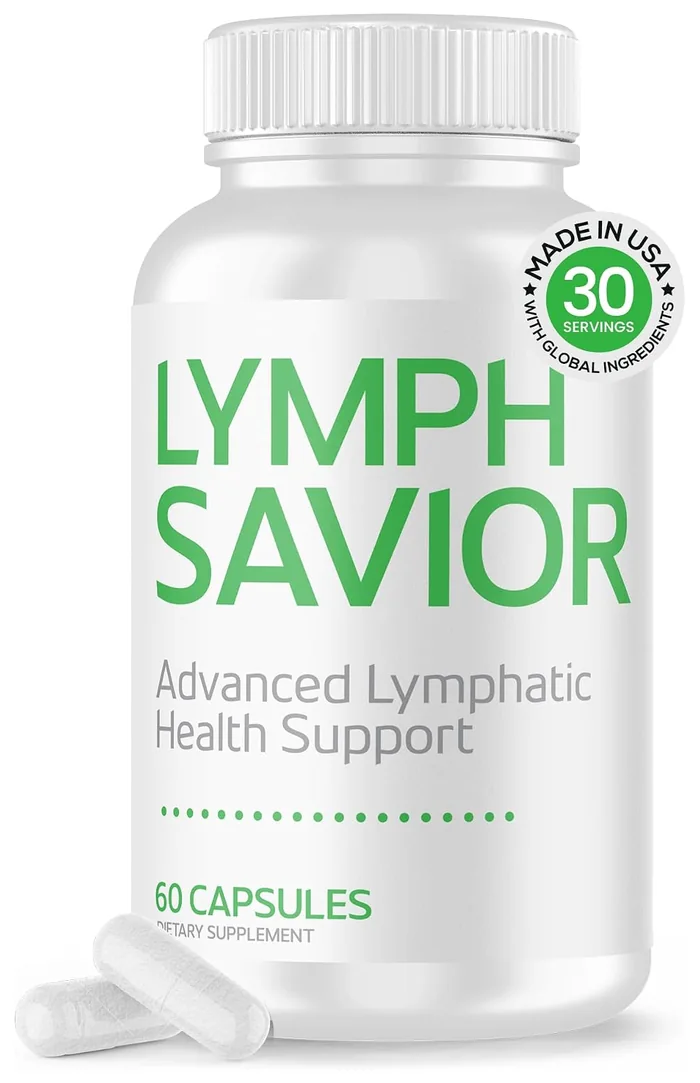
Lymph Savior, with the case reports read in full rather than summarised away
Six botanicals, and a website that reads its own cited case reports down to the laboratory values rather than leaving them as a single reassuring adjective.
One bottle $79 · three bottles $207 · 60-day money-back guarantee
Order Lymph Savior On The Official Website60 capsules a bottle · lot LYM-26/LY-1430 · ships from the U.S.
Why this stays separate from the efficacy evidence
Centella asiatica's best human evidence, a systematic review of eight randomised trials in chronic venous insufficiency at 60 to 120 mg a day of its total triterpenic fraction, is a different body of literature answering a different question: whether the plant does something useful at a stated dose, in a defined population, measured against a control group (Chong & Aziz, 2013). This website's ingredients page covers that evidence on its own terms.
This article deliberately does not draw on that efficacy literature, and does not let the two bodies of evidence blur into each other. A randomised trial and a case report are different instruments, built to answer different questions, and a safety case report says nothing about whether the plant works, in the same way an efficacy trial says nothing about how rare a case report's event is. Keeping the two separate is not a stylistic choice; it is the only way either piece of evidence means what it actually says.
What a reader should do with two case reports
- Read both case reports as real, specific, documented events, not as a vague cautionary rumour.
- Do not convert two case reports into a percentage risk; no published denominator exists to support one.
- Note the re-challenge in Jorge and Jorge's first patient as a genuinely stronger piece of evidence than a single unexplained case would be.
- Stop and get checked for dark urine, yellowing skin or eyes, or persistent nausea while taking any botanical, centella included, and treat that as the practical instruction this article is building toward.
- Keep this safety question separate from the question of whether centella's venous-circulation trials are convincing; they are different literatures and this website treats them as such.
The side-effects page covers the other interactions on this label in the same style, and the ingredients page sets out centella's efficacy evidence on its own page.
- Jorge OA, Jorge AD. Hepatotoxicity associated with the ingestion of Centella asiatica. Rev Esp Enferm Dig. 2005;97(2):115-24. https://pubmed.ncbi.nlm.nih.gov/15801887/.
- Dantuluri S, North-Lewis P, Karthik SV. Gotu Kola induced hepatotoxicity in a child - need for caution with alternative remedies. Dig Liver Dis. 2011;43(6):500. https://pubmed.ncbi.nlm.nih.gov/21334992/.
- LiverTox: Clinical and Research Information on Drug-Induced Liver Injury. Centella asiatica. Bethesda (MD): National Institute of Diabetes and Digestive and Kidney Diseases. https://www.ncbi.nlm.nih.gov/books/NBK603561/
- Chong NJ, Aziz Z. A systematic review of the efficacy of Centella asiatica for improvement of the signs and symptoms of chronic venous insufficiency. Evid Based Complement Alternat Med. 2013;2013:627182. https://pubmed.ncbi.nlm.nih.gov/23533507/.