Lymph Savior Official Website › Articles › Ingredient deep dive
Ingredient deep diveRed Root: The Lymphatic Herb Whose Research Trail Stops In 1868
The most traditionally lymphatic plant on this label has no modern clinical literature at all.
Ceanothus americanus, red root or New Jersey tea, has been prescribed for swollen nodes and sluggish drainage for well over a century. A search of the medical index returns botany, soil ecology, plant chemistry, and one clinical article published in 1868.
Lymph Savior is a dietary supplement, not a treatment. Nothing here is medical advice. Swelling that is new, on one side only, painful, hot or spreading needs assessment the same day rather than a purchase, and the NHS page on lymphoedema sets out what is worth reporting.
The plant, and its reputation
Ceanothus americanus is a low North American shrub with white flower clusters and a deep red root. Its leaves were brewed as a tea substitute during the American colonial boycotts, which is where the name New Jersey tea comes from.
In Western herbal practice the root has a specific and long-standing role: it is the lymphatic remedy. It appears in nineteenth-century Eclectic materia medica, in twentieth-century herbals, and on a great many modern supplement labels sold for lymphatic support, including this one.
That reputation is the reason it is third on the Lymph Savior ingredient list. It is also, as far as the published literature goes, the whole of what is known about it.
What the medical index actually returns
Searching the National Library of Medicine for Ceanothus americanus, and for the same term alongside clinical, randomised and lymphatic keywords, returns a small and consistent set of results. None of them is a study in people of the root as a remedy.
| What comes back | What it is about |
|---|---|
| Plant peptide chemistry | Copper-dependent enzymes that make cyclic peptides in plants. |
| Soil and nitrogen fixation | The bacteria that live in the shrub’s root nodules. |
| Prairie ecology | Community structure around the shrub in Illinois tallgrass prairie. |
| Butterfly conservation | Nectar sources in oak savannas. |
| One clinical article, 1868 | The Atlanta Medical and Surgical Journal (Phares, 1868). |
That is the whole of it. No randomised trial, no controlled study, no pharmacokinetic work, no published safety series.
It is worth being precise about the claim being made here. This is not an assertion that the plant does nothing, and it is not a criticism of herbal practice, which has its own long traditions of observation. It is a statement about what has been published and indexed, which is close to nothing.
The one clinical record
The single indexed clinical article is D. L. Phares, writing in the Atlanta Medical and Surgical Journal, on Ceanothus americanus, red root, New Jersey tea (Phares, 1868).
It predates the randomised controlled trial by roughly eighty years, predates blinding, predates placebo control, and predates almost every method by which a modern reader would judge whether something worked. It is a physician writing down what he believed he had observed.
That is a legitimate historical document and it is a poor basis for spending money in 2026. It is cited here because it is the whole of the clinical record, and a reader is better served knowing that than being left to assume there is more.
Lymph Savior, with the numbers this desk does have
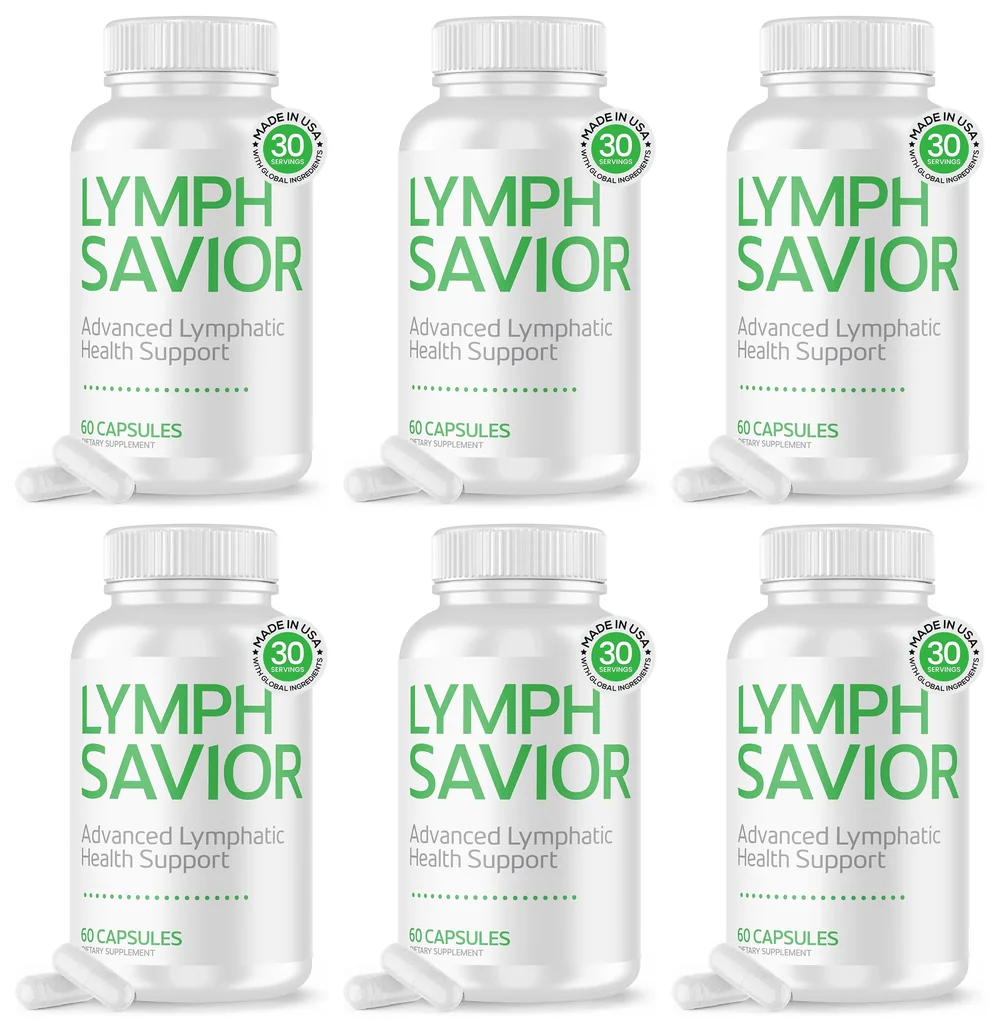
Six botanicals, two capsules a day, sixty to a bottle, and every trial amount on this website attributed to the trial it came from.
One bottle $79 · three bottles $207 · 60-day money-back guarantee
Order Lymph Savior On The Official Website60 capsules a bottle · lot LYM-26/LY-1430 · ships from the U.S.
Absence of evidence, and what it does and does not mean
The phrase absence of evidence is not evidence of absence gets used to close this conversation, and it deserves a more careful answer than that, because it is true and it is not a defence.
- It is true that no trial means no demonstrated effect, not a demonstrated lack of one. Red root may do something useful.
- It is also true that no trial means no demonstrated safety profile, no known dose, no known interactions and no idea what happens over months.
- A plant with two hundred years of traditional use has accumulated observation, and observation is worth something. It is not worth the same as a controlled comparison.
- The practical consequence is that nobody, including the manufacturer, can say what a useful amount of red root would be. And this label does not say how much it contains either.
- So two unknowns sit on top of each other: what the plant does, and how much of it is in the capsule.
Compare that with the horse chestnut two lines above it on the same label, where a specific extract at a specific dose was compared against compression stockings in 240 people (Diehm, Lancet 1996). The difference between those two ingredients is not a matter of degree. It is the difference between a number and a tradition.
Why a plant like this is on a modern label
Three reasons, and they are not all cynical.
The first is category signalling. Red root is what a lymphatic formula is expected to contain, in the same way a sleep formula is expected to contain valerian. Its presence tells a buyer familiar with the category that this is a lymphatic product.
The second is that herbal formulation has its own logic, in which plants are combined for traditional roles rather than assembled from trial data. That is a coherent system on its own terms even where it does not overlap with the evidence base.
The third is that it is cheap and uncontroversial. A plant with no trials also has no published adverse events, which is not the same as being safe but does make it easy to include.
It does not describe red root as clinically supported, traditionally proven, or backed by research, because none of those is true. It is named on the label, so it is named here, with the state of the literature beside it. The ingredients page does the same for all six plants.
The other five plants, ranked by what is known
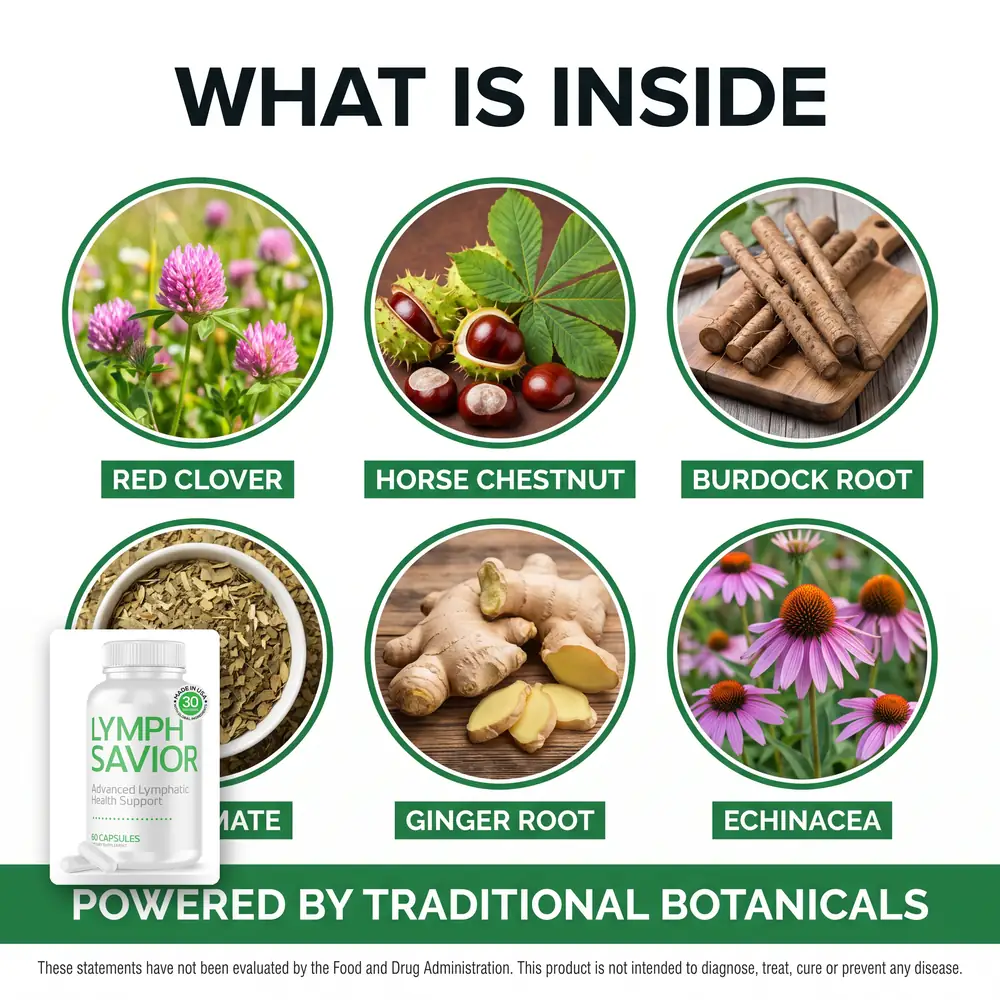
Red root is the extreme case on this label, and the rest of the formula sits on a spectrum rather than at one end of it. Ranking the six by how much is actually known about them is a more useful exercise than reading the list in label order.
| Plant | Best human evidence | What was measured | Distance from this label |
|---|---|---|---|
| Horse chestnut seed | Randomised trials and a Cochrane review at 50 mg aescin twice daily (Cochrane HCSE, 2012) | Lower-leg volume and leg pain in chronic venous insufficiency | Closest of the six, and still a different system |
| Centella asiatica | A systematic review of eight studies at 60 to 120 mg a day (Chong & Aziz, 2013) | Microcirculation and ankle swelling | Second closest |
| Red clover | Nine randomised trials pooled, 37.1 to 160 mg isoflavones daily (Jiang & Wu, 2026) | Menopausal hot flushes | Real evidence, unrelated use |
| Yerba mate | Thirteen randomised trials pooled (Li, 2025) | Glycaemic and cardiometabolic markers | Real evidence, unrelated use |
| Burdock root | Three small randomised trials, mostly as a tea (Maghsoumi-Norouzabad, 2016) | Inflammatory and oxidative markers | Thin, and a different preparation |
| Red root | None indexed (Phares, 1868) | Nothing | Traditional use only |
Read downward, the formula thins quickly. Two plants with dose-specific trials, two with trials in other conditions, one with three small studies in a different form, and one with none.
Nothing in that table is evidence about Lymph Savior, which has never been tested as a formula, and every amount in it belongs to a trial rather than to this bottle. It is a map of how much is known about each name on the label, which is the most a reader can have when the amounts are not published.
What a reader should do with it
- Weigh the formula by its best-evidenced ingredient rather than by its longest list. On this label that is horse chestnut, followed by centella (Chong & Aziz, 2013).
- Treat traditional ingredients as traditional. They may be doing something; there is no way to tell from outside and no way to dose them rationally.
- Ask what a formula would look like without them. A six-plant capsule with two evidenced plants in it is, on the evidence, a two-plant capsule with four traditions attached.
- Remember that no amount is published for any of the six here, which makes the question harder rather than easier.
- If the traditional half of the formula is what appeals, that is a legitimate reason to buy it, and it is a different reason from the one the word research would suggest.
This article costs the product something and it is on the website that sells it. That is deliberate: a desk that only prints the parts of a label it likes is not describing a product, it is advertising one. The rest of the label is set out on the ingredients page, and the ladder is here.
- Jiang W, Wu K. The effectiveness of red clover on hot-flash in menopausal women: a GRADE-assessed systematic review and meta-analysis. Eur J Obstet Gynecol Reprod Biol. 2026;324:115226. https://pubmed.ncbi.nlm.nih.gov/42269521/.
- Pittler MH, Ernst E. Horse chestnut seed extract for chronic venous insufficiency, Cochrane Database Syst Rev. 2012;11:CD003230. https://pubmed.ncbi.nlm.nih.gov/23152216/.
- Diehm C, Trampisch HJ, Lange S, Schmidt C. Comparison of leg compression stocking and oral horse-chestnut seed extract therapy in patients with chronic venous insufficiency, Lancet. 1996;347(8997):292-4. https://pubmed.ncbi.nlm.nih.gov/8569363/.
- Phares DL. Ceanothus Americanus: Red Root, New Jersey Tea. Atlanta Med Surg J. 1868;9A(3):129-131. https://pubmed.ncbi.nlm.nih.gov/35824507/.
- Chong NJ, Aziz Z. A systematic review of the efficacy of Centella asiatica for improvement of the signs and symptoms of chronic venous insufficiency, Evid Based Complement Alternat Med. 2013;2013:627182. https://pubmed.ncbi.nlm.nih.gov/23533507/.
- Maghsoumi-Norouzabad L, Alipoor B, Abed R, et al. Effects of Arctium lappa L. (Burdock) root tea on inflammatory status and oxidative stress in patients with knee osteoarthritis, Int J Rheum Dis. 2016;19(3):255-61. https://pubmed.ncbi.nlm.nih.gov/25350500/.
- Li D, Yue L, Peng X, et al. Yerba Mate and its impact on glycemic control and metabolic health: a systematic review and meta-analysis, Front Endocrinol (Lausanne). 2025;16:1641592. https://pubmed.ncbi.nlm.nih.gov/41244043/.
- NHS. Lymphoedema. https://www.nhs.uk/conditions/lymphoedema/