Lymph Savior Official Website › Articles › Ingredient deep dive
Ingredient deep diveHorse Chestnut Seed Extract: The One Ingredient Here With A Number Behind It
Fifty milligrams of aescin, twice a day, for twelve weeks.
That is the figure behind the best-evidenced plant on this label, and it came out of a trial that set horse chestnut seed extract against class II compression stockings in 240 people. It is also a venous number rather than a lymphatic one, and that distinction is the whole of this article.
Lymph Savior is a dietary supplement, not a treatment. Nothing here is medical advice. Swelling that is new, on one side only, painful, hot or spreading needs assessment the same day rather than a purchase, and the NHS page on lymphoedema sets out what is worth reporting.
What horse chestnut seed extract actually is
The horse chestnut is the tree that drops conkers. The seed contains a mixture of triterpene saponins collectively called aescin, and that mixture is the part with pharmacology behind it.
A standardised extract is made by taking the seed, extracting it, and adjusting the result so that a stated percentage of it is aescin. That standardisation is the only reason the plant has usable clinical evidence: it means one capsule in one trial can be compared with one capsule in another.
The proposed mechanism is on capillary permeability. Aescin appears to reduce the leakiness of small vessels, which is why the outcome measured in its trials is fluid volume in the lower leg rather than anything about the vessels themselves.
The trial that produced the number
In 1996 the Lancet published a comparison that is still the clearest single piece of evidence for any plant on this shelf. Two hundred and forty people with chronic venous insufficiency were randomised across three arms for twelve weeks: dried horse chestnut seed extract standardised to 50 mg of aescin twice daily, class II compression stockings, or placebo.
| Arm | n | Change in lower-leg volume at 12 weeks |
|---|---|---|
| Horse chestnut seed extract, 50 mg aescin twice daily | 95 | Fell by 43.8 ml |
| Class II compression stockings | 99 | Fell by 46.7 ml |
| Placebo | 46 | Rose by 9.8 ml |
Figures as reported in the trial (Diehm, Lancet 1996). Both active arms differed significantly from placebo and were shown to be equivalent to each other.
Two things make this result unusually useful. The first is the comparator: it was not tested against nothing, it was tested against the standard conservative treatment, and it held its own. The second is that the dose is stated in the active constituent rather than in milligrams of powder, which is what makes it reproducible.
What the Cochrane review adds
A single trial is a single trial. The Cochrane review of oral horse chestnut seed extract for chronic venous insufficiency, last updated in 2012, pooled the wider literature: seven placebo-controlled trials assessing leg pain and seven assessing leg volume.
Six of the seven pain trials reported significant reduction against placebo. Pooling six volume trials across 502 participants gave a weighted mean difference of 32.1 ml in favour of the extract, with a confidence interval from 13.49 to 50.72. Adverse events were described as usually mild and infrequent. The review’s conclusion was that the extract is an efficacious and safe short-term treatment for the condition (Cochrane HCSE, 2012).
The reviewers were explicit that the evidence supports short-term treatment. Nothing in it establishes what happens over a year, and nothing in it is about a six-plant capsule taken indefinitely.
Lymph Savior, with the numbers this desk does have
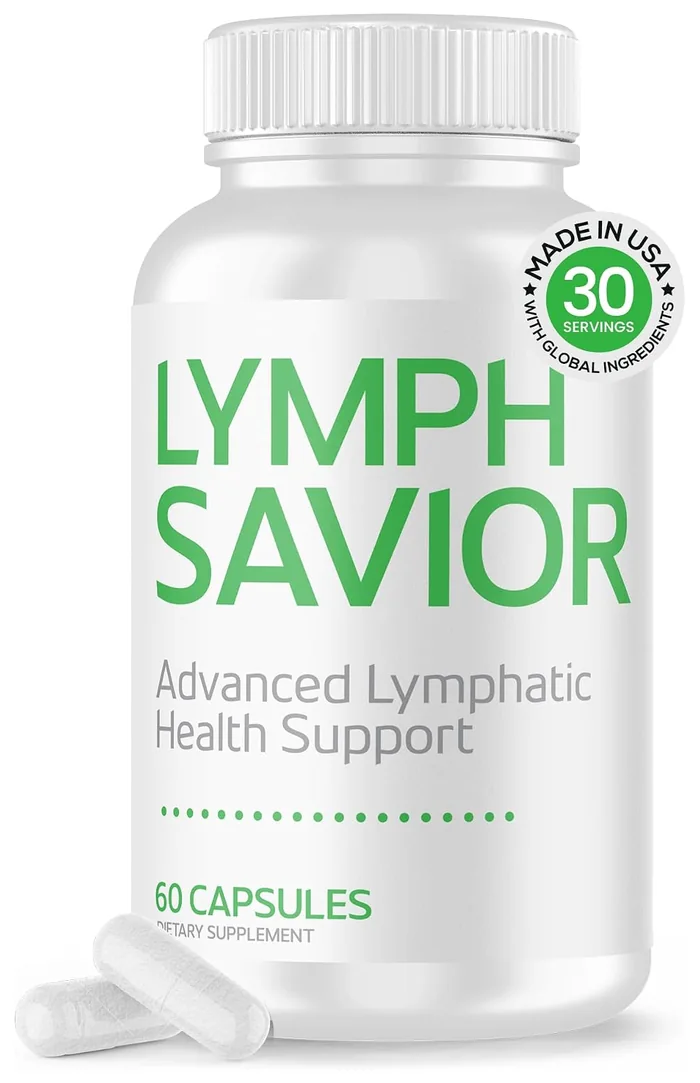
Six botanicals, two capsules a day, sixty to a bottle, and every trial amount on this website attributed to the trial it came from.
One bottle $79 · three bottles $207 · 60-day money-back guarantee
Order Lymph Savior On The Official Website60 capsules a bottle · lot LYM-26/LY-1430 · ships from the U.S.
Venous and lymphatic are not the same system
Every trial described above was run in chronic venous insufficiency, and this bottle is sold for lymphatic health support. Those are two different systems with two different failure modes, and the difference is worth spelling out because a great deal of marketing in this category depends on the reader not noticing it.
| Chronic venous insufficiency | Lymphoedema | |
|---|---|---|
| What fails | Valves in the leg veins leak, so venous pressure rises. | The lymphatic vessels cannot carry away the fluid arriving. |
| What accumulates | Water forced out of capillaries under pressure. | Protein-rich fluid that the lymphatics normally return. |
| Typical pattern | Both legs, aching, worse standing, often with varicose veins. | Often one limb, often after surgery or radiotherapy. |
| First-line management | Compression, elevation, movement. | Fitted compression, decongestive therapy, exercise, skin care. |
| What the plants here were tested in | This column. | Not this one. |
Sources for the management columns: Gloviczki, 2025 and Torgbenu, 2023.
They can look similar at the ankle, which is why the confusion persists. They are managed differently and a result in one does not transfer to the other. This website keeps saying the word venous for that reason, and it is the single most important sentence on this page.
The gap between that number and this bottle
Here is the awkward arithmetic, and it is the reason this article exists.
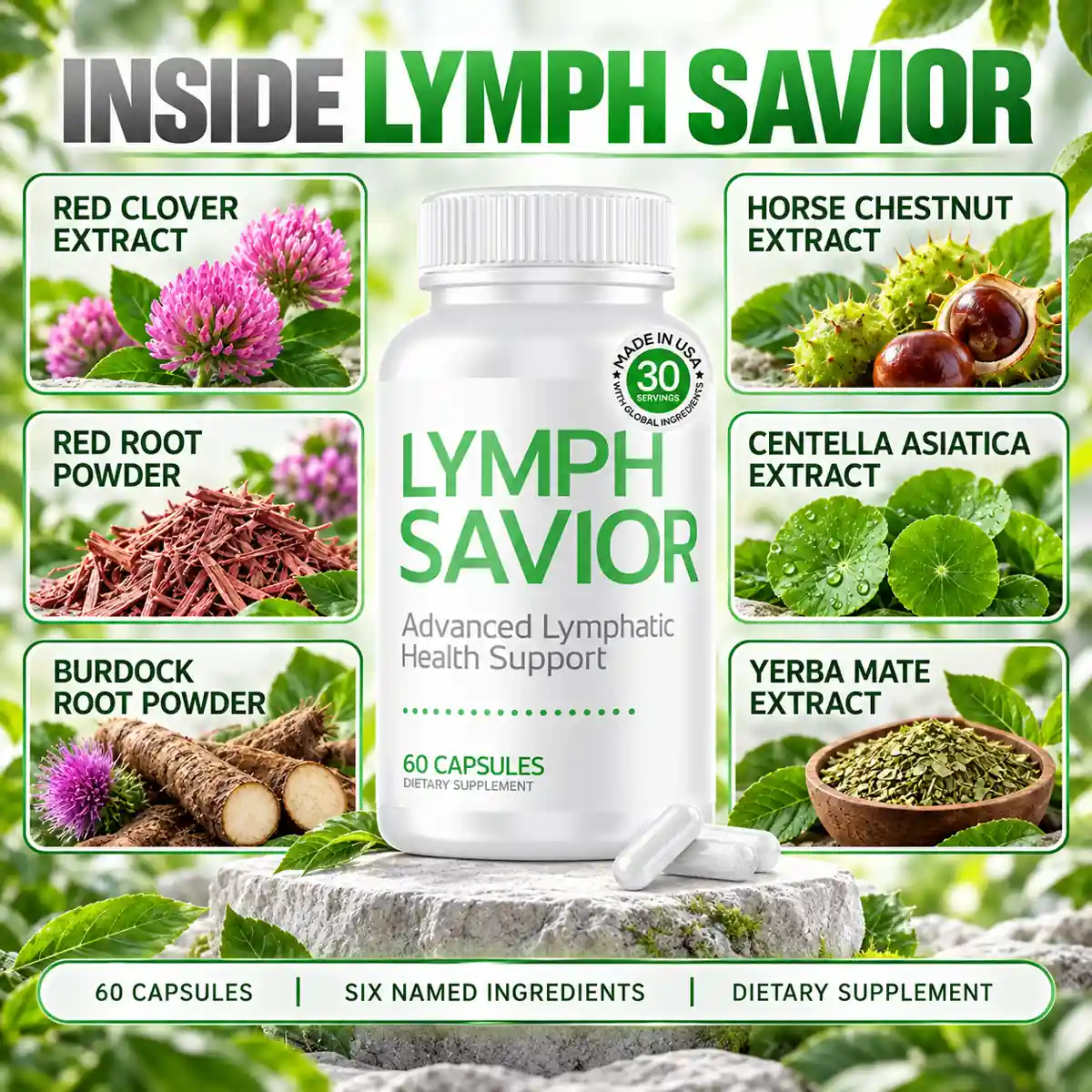
The trial dose is 50 mg of aescin twice daily, which is 100 mg of aescin a day. Lymph Savior publishes no amount for its horse chestnut, no percentage of aescin, and no total weight for the blend. The artwork supplied with this pack shows no Supplement Facts panel, and neither vendor graphic nor the seller’s page adds one.
So nobody outside the manufacturer can say whether a two-capsule serving delivers a hundred milligrams of aescin, ten, or a trace. The plant is second on a list of six in a capsule that also has to accommodate red clover, red root, centella, burdock and yerba mate, which is a physical constraint worth thinking about.
- What is known: the plant is named on the label and on both vendor graphics.
- What is known: the studied figure is 50 mg of aescin twice daily.
- What is not known: how much of the plant a capsule holds.
- What is not known: what fraction of that is aescin.
- What is not knowable from the outside: whether the two numbers are within an order of magnitude of each other.
None of that means the capsule contains nothing useful. It means the question cannot be answered, which is a different complaint and a fair one. A reader who wants a checkable aescin figure can buy a standalone standardised extract for less money, and this desk would rather say so than pretend otherwise. The ingredients page sets out the same comparison for all six plants.
Safety, and the difference extraction makes
Whole horse chestnut seed is toxic. It contains aesculin, and eating conkers is a recognised route to a poisoning call. The extract used in every trial above has that removed, which is precisely what makes it a supplement rather than a hazard.
In the pooled trials, adverse events were mild and infrequent, mostly gastrointestinal, dizziness and headache (Cochrane HCSE, 2012). The national drug-induced liver injury reference carries an entry for the extract, as it does for most widely used botanicals (LiverTox: horse chestnut), and the national complementary health page sets out the standard cautions (NCCIH: horse chestnut).
What a standalone horse chestnut label looks like
It is worth describing the alternative concretely, because the comparison is the whole practical content of this article.
A single-plant horse chestnut supplement carries a Supplement Facts panel with a serving size, a milligram figure for the extract, and a stated percentage standardised to aescin. From those three numbers a reader can calculate the aescin per serving in about ten seconds and set it beside the 100 mg a day the trials used.
That is not a claim that single-plant products are better formulated. It is a claim that they are checkable, and checkability is the thing this label gives up in exchange for putting six plants in one capsule.
| What a buyer wants to know | Standalone standardised extract | This six-plant capsule |
|---|---|---|
| Milligrams of extract per serving | Printed on the panel | Not published |
| Percentage standardised to aescin | Usually printed | Not published |
| Aescin per serving | Calculable in seconds | Not calculable |
| Comparison with the trial dose | Direct | Impossible from outside |
| Other plants in the bottle | None | Five |
| Typical cost a day | $0.50 to $1.20 | $1.63 to $2.63 |
Costs are indicative market ranges for the category rather than quotes from any particular seller.
What a reader can do with all this
- Decide whether the complaint you are treating is venous or lymphatic. If there are visible varicose veins and both legs ache by evening, the trials above are closer to your situation than most of this shelf.
- If it is lymphoedema, look at the clinical pathway rather than the shelf. That is compression, therapy and exercise (NCI: lymphoedema).
- If you want a checkable dose, buy a standardised single-plant extract and read the aescin figure on the panel.
- If you want six plants in one capsule and can accept that the amounts are not published, the ladder is here and the window is 60 days from purchase.
- Either way, put a walk and a fitted pair of compression socks next to whatever you choose. They are the comparator that held its own against the best result on this page.
- Torgbenu E, Luckett T, Buhagiar MA, et al. Guidelines relevant to diagnosis, assessment, and management of lymphedema: a systematic review. Adv Wound Care (New Rochelle). 2023;12(1):15-27. https://pubmed.ncbi.nlm.nih.gov/35196892/.
- Pittler MH, Ernst E. Horse chestnut seed extract for chronic venous insufficiency, Cochrane Database Syst Rev. 2012;11:CD003230. https://pubmed.ncbi.nlm.nih.gov/23152216/.
- Diehm C, Trampisch HJ, Lange S, Schmidt C. Comparison of leg compression stocking and oral horse-chestnut seed extract therapy in patients with chronic venous insufficiency, Lancet. 1996;347(8997):292-4. https://pubmed.ncbi.nlm.nih.gov/8569363/.
- Gloviczki ML, Kakkos SK, Urbanek T, et al. The role of venoactive compounds in the treatment of chronic venous disease. J Vasc Surg Venous Lymphat Disord. 2025;13(4):102258. https://pubmed.ncbi.nlm.nih.gov/40348378/.
- LiverTox: Clinical and Research Information on Drug-Induced Liver Injury. Horse Chestnut. Bethesda (MD): National Institute of Diabetes and Digestive and Kidney Diseases. https://www.ncbi.nlm.nih.gov/books/NBK548217/
- National Center for Complementary and Integrative Health. Horse Chestnut. https://www.nccih.nih.gov/health/horse-chestnut
- National Cancer Institute. Lymphedema (PDQ) - Patient Version. https://www.cancer.gov/about-cancer/treatment/side-effects/lymphedema/lymphedema-pdq
- NHS. Lymphoedema. https://www.nhs.uk/conditions/lymphoedema/